
Prefer to listen instead?
Hear the full story — inside Japan’s first transplant of lab-grown dopamine-producing cells, what the trial actually showed, and why scientists are urging hope without the hype.
In a groundbreaking step for regenerative medicine, Japanese doctors have begun using laboratory-grown dopamine-producing cells to treat Parkinson’s disease. Early results offer hope, but scientists caution that the road toward a lasting treatment is far from over.
A Quiet Medical Breakthrough in Japan
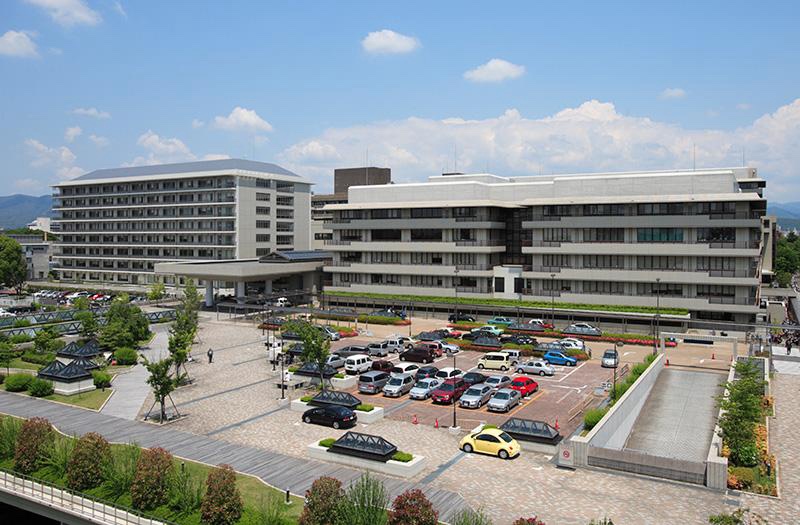
In October 2026, a woman in her 50s entered Kyoto University Hospital to undergo a remarkable medical procedure.
Rather than relying exclusively on medication to manage her Parkinson’s disease, surgeons transplanted laboratory-grown cells into her brain, hoping they would eventually help restore some of the neurological functions damaged by the disease.
The woman has since been discharged from the hospital, and her postoperative recovery has reportedly progressed well. Japanese broadcaster Kansai TV also reported that she has returned to work.
It is far too early to determine whether the procedure will produce meaningful long-term improvements in her symptoms.
Nevertheless, the operation represents an extraordinary milestone.
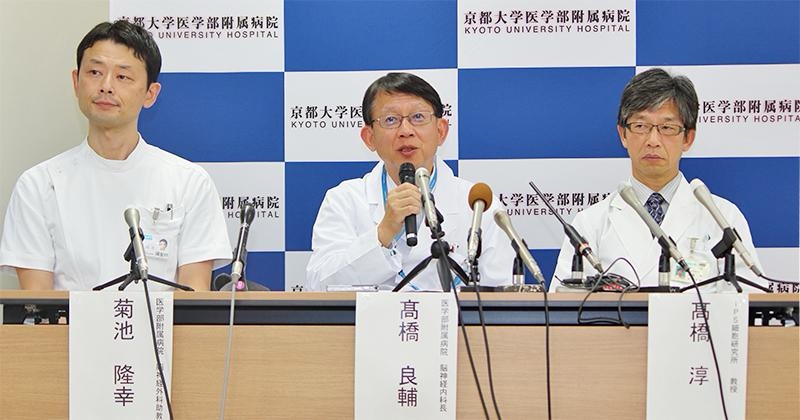
On October 30, Kyoto University Hospital confirmed that it had begun administering a new regenerative treatment derived from induced pluripotent stem cells, commonly known as iPS cells.
The treatment, called Amchepry, received conditional and time-limited approval from Japanese regulators in March 2026. It is the world’s first approved regenerative medicine derived from iPS cells, alongside another Japanese therapy for heart disease approved on the same day.
For decades, researchers have investigated whether damaged or missing cells could be replaced to treat diseases once considered irreversible.
Now, in Japan, that possibility is moving beyond early laboratory experiments and into a carefully monitored phase of patient treatment.
The implications could extend far beyond Parkinson’s disease.
But before declaring a medical revolution, scientists must answer a difficult question: Can these transplanted cells provide lasting improvements without introducing new risks?
Understanding Parkinson’s Disease
Parkinson’s disease is a progressive neurological disorder affecting movement, coordination, and numerous functions beyond motor control.
Common symptoms include tremors, muscle stiffness, slowed movement, and difficulties with balance.
Patients may also experience sleep disturbances, cognitive changes, constipation, and other non-motor symptoms.
At the center of the disease is the progressive loss of neurons in a region of the brain known as the substantia nigra.
These neurons produce dopamine, a chemical messenger involved in coordinating movement.
As dopamine-producing cells deteriorate, the brain becomes less capable of regulating certain motor functions.
For decades, one of the principal treatments has been levodopa, a medication the body converts into dopamine.
For many patients, levodopa can provide substantial relief, particularly during earlier stages of the disease.
However, as Parkinson’s progresses, patients may experience fluctuations in medication effectiveness and involuntary movements associated with treatment.
Other approaches, including deep brain stimulation, can help selected patients manage symptoms.
But these interventions do not reliably stop or reverse the underlying neurodegenerative process.
That limitation is what makes Japan’s recent development so interesting.
Instead of simply compensating for declining dopamine activity, researchers are attempting to introduce new cells capable of producing dopamine inside the brain.
The goal is not just to deliver another medication.
It is to replace part of the cellular function lost to disease.
How Scientists Grow New Brain Cells
The technology behind Amchepry originates from one of the most influential discoveries in modern stem-cell research.
In 2006, Japanese scientist Shinya Yamanaka and his colleague Kazutoshi Takahashi demonstrated that mature mouse cells could be reprogrammed into a state resembling embryonic stem cells.
Researchers subsequently demonstrated similar reprogramming in human cells.
These cells became known as induced pluripotent stem cells.
Their defining characteristic is the ability to develop into many specialized cell types under appropriate laboratory conditions.
That includes certain types of nerve cells, heart muscle cells, and other tissues.
The research transformed regenerative medicine because scientists no longer needed to rely exclusively on embryonic stem cells to investigate the replacement of damaged tissue.
For Parkinson’s disease, the challenge was to direct iPS cells into becoming dopamine-producing neuronal precursors suitable for transplantation.
Working at Kyoto University’s Center for iPS Cell Research and Application, researchers developed a method for producing these specialized cells from healthy donors.
The cells are carefully cultivated, differentiated, and tested before transplantation.
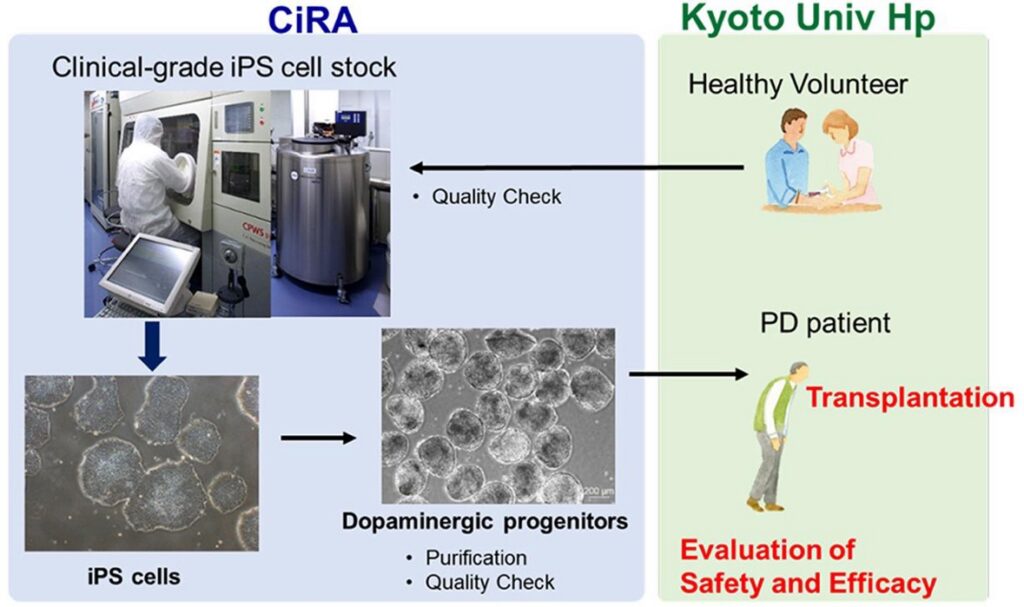
Amchepry uses donor-derived cells rather than cells individually manufactured from each patient’s own tissue.
The resulting product contains dopaminergic neural progenitor cells—immature cells intended to develop into functional dopamine-producing neurons.
Surgeons implant these cells into the putamen, a brain region involved in movement control.
If the transplanted cells survive and function as intended, they may help restore dopamine signaling.
That is the theory.
And early clinical research suggests that at least some of those biological processes are taking place.
What the First Clinical Trial Actually Found
The scientific foundation for Japan’s approval comes from a small clinical study conducted at Kyoto University Hospital.
Beginning in 2018, researchers transplanted iPS-cell-derived dopaminergic progenitors into seven patients with Parkinson’s disease.
Participants were between 50 and 69 years old.
Researchers followed the patients for approximately two years, examining safety, motor function, and evidence of dopamine production.
The findings were published in the scientific journal Nature in April 2025.
The study produced several encouraging observations.
First, researchers reported no serious adverse events during the trial’s follow-up period, although 73 mild-to-moderate adverse events were recorded.
Brain imaging showed no evidence that the transplanted cells had developed into tumors during the observation period.
Second, imaging provided evidence that the implanted cells survived and produced dopamine.
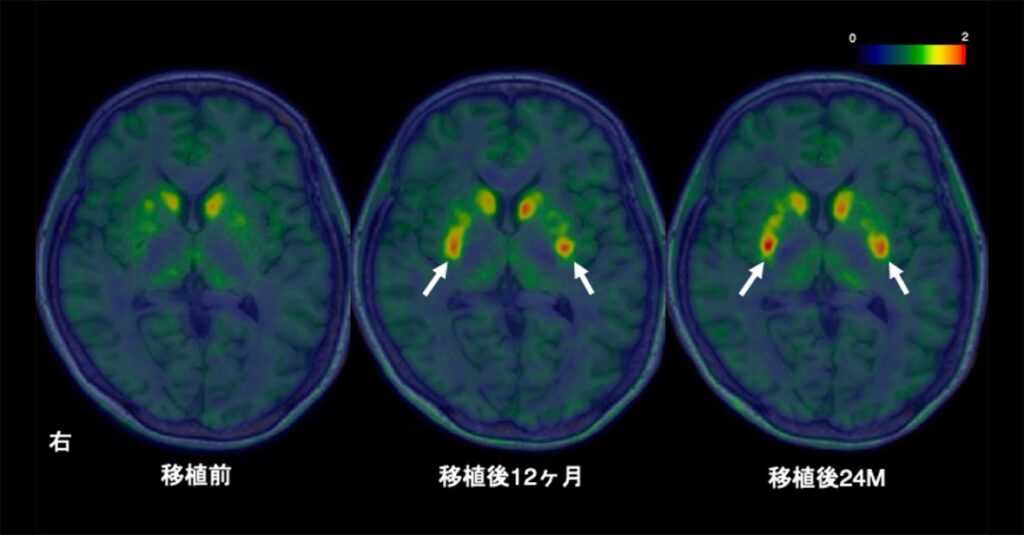
Third, several participants experienced improvements in motor assessments.
Among six patients evaluated for efficacy, four showed improvements in standardized motor-function scores when assessed without the immediate effects of their usual Parkinson’s medication.
Five showed improvements when assessed while taking medication.
Across the six patients, the average improvement in the off-medication motor score was approximately 20%.
These findings provided important early evidence that transplanted cells could remain active in the human brain.
But the numbers require careful interpretation.
The study was extremely small, did not include a randomized control group, and was designed primarily to evaluate safety.
Some other measures, including patient-reported quality-of-life outcomes, did not demonstrate clear average improvements.
Additionally, the absence of tumors during a two-year study does not eliminate all possible long-term risks.
The results are scientifically significant, but they do not establish that the treatment reliably improves symptoms for the broader Parkinson’s population.
Nor do they demonstrate a cure.
Why Japan Approved the Treatment Before Larger Trials
In March 2026, Japan’s Ministry of Health, Labour and Welfare granted Amchepry conditional and time-limited marketing authorization.
The therapy was developed through research led by Kyoto University’s Professor Jun Takahashi and commercialized by Sumitomo Pharma in cooperation with RACTHERA.
The authorization was historically significant.
It represented one of the first practical regulatory approvals for regenerative products manufactured using induced pluripotent stem cells.
However, conditional approval is not equivalent to the full approval typically granted after extensive confirmatory clinical testing.
Japan has established a regulatory pathway that can allow certain regenerative products to reach patients after preliminary evidence supports safety and suggests potential effectiveness.
Manufacturers must subsequently collect additional clinical data to confirm whether the treatment delivers the anticipated benefits.
Supporters argue that this system can accelerate access to innovative treatments for serious diseases with substantial unmet medical needs.
Critics caution that allowing therapies into clinical use before their effectiveness has been established through larger studies can expose patients to uncertainty.
Both considerations are particularly important for a procedure involving the surgical transplantation of cells into the brain.
In July, Kyoto University Hospital explained that Amchepry would continue undergoing post-approval clinical evaluation.
That context is essential to understanding the October treatment announcement.
The patient was not receiving an established cure.
She was receiving an innovative therapy whose long-term clinical value is still being investigated.
The Woman at the Center of Japan’s Latest Milestone
On October 30, Kyoto University Hospital announced that the first patient had undergone transplantation with the newly authorized Amchepry product earlier that month.
The patient was a woman in her 50s.
Hospital officials reported that her postoperative condition was favorable and that she had already been discharged.
Kansai TV reported that she had also returned to work.
The hospital has not publicly released detailed information establishing how much her Parkinson’s symptoms have changed following surgery.
That distinction matters.
A successful operation and a positive immediate recovery do not necessarily demonstrate that the transplanted cells have already improved neurological function.
Cell-based therapies may require extended observation to determine whether transplanted cells survive, mature, and provide measurable benefits.
According to Japanese reporting on Sumitomo Pharma’s plans, approximately one or two patients are expected to undergo treatment during the company’s 2026 fiscal year, with larger numbers anticipated in subsequent years.
The company reportedly aims to treat approximately ten patients in fiscal 2027 and ten to twenty in fiscal 2028 while continuing to evaluate safety and effectiveness.
These relatively small numbers highlight how carefully the therapy is being introduced.
For the woman who underwent treatment, the coming months and years will be especially important.
For the researchers, every follow-up assessment may provide valuable evidence about how transplanted cells behave inside the human brain.
And for the broader medical community, the procedure represents another step toward understanding whether regenerative cell therapy can meaningfully change the course of neurological treatment.
Could Parkinson’s Eventually Become Treatable Through Cell Replacement?
The promise of cell transplantation is compelling.
Unlike medications that temporarily compensate for reduced dopamine activity, implanted dopamine-producing cells could potentially provide a more sustained source of dopamine within affected brain circuits.
But Parkinson’s disease is more complicated than the disappearance of one particular cell type.
The condition also involves widespread neurological changes affecting systems beyond dopamine-related movement control.
Even if transplanted cells successfully restore dopamine activity, that would not necessarily address cognitive symptoms, sleep problems, autonomic dysfunction, or continued degeneration elsewhere in the nervous system.
There are also significant medical challenges.
Transplanted cells must survive in the brain, integrate sufficiently with existing neural circuits, and produce dopamine at appropriate levels.
Because the cells originate from donors, immune rejection is another concern, and immunosuppressive treatment may introduce additional risks.
Researchers must also monitor for unwanted cell growth, abnormal movements, and other complications.
Manufacturing presents further difficulties.
Producing standardized, clinically suitable cell therapies requires specialized laboratories, extensive quality control, and highly trained personnel.
The surgical procedure itself demands expertise and appropriate facilities.
These requirements could make access expensive and difficult to scale, particularly outside highly specialized medical centers.
As a result, even if future studies establish strong clinical benefits, making the treatment widely available will present another major challenge.
For now, the therapy represents an experimental frontier progressing through regulated clinical use, not an accessible treatment for everyone living with Parkinson’s.
A Scientific Achievement Years in the Making
Japan’s progress did not happen overnight.
It is the result of decades of research in stem-cell biology, neuroscience, regenerative medicine, and surgical treatment.
Yamanaka’s pioneering work on cellular reprogramming earned him the 2012 Nobel Prize in Physiology or Medicine, shared with British scientist John Gurdon.
That discovery helped establish the scientific foundation for the therapies now reaching patients.
Researchers then spent years learning how to develop stable, specialized cells suitable for transplantation.
Preclinical studies examined their behavior and safety.
Clinical teams developed surgical procedures and monitoring protocols.
Regulators evaluated the evidence, while pharmaceutical companies worked to establish manufacturing systems.
The result is a rare example of fundamental scientific research evolving into a real medical product within two decades.
It also underscores the importance of sustained investment in scientific institutions.
Many transformative medical technologies begin as discoveries whose practical usefulness is unclear.
Only years later do their potential applications become visible.
Japan’s new Parkinson’s treatment is a reminder that breakthroughs are often the cumulative result of patient, incremental scientific progress.
The Global Implications
The significance of Amchepry extends beyond Japan’s healthcare system.
Researchers in other countries are investigating related approaches to replacing dopamine-producing neurons.
Clinical studies involving stem-cell-derived dopamine neurons are also underway in the United States and elsewhere.
Although these projects use different technologies and cell sources, they reflect a broader shift toward exploring whether neurological function can be restored through cellular replacement.
For years, regenerative medicine has promised the possibility of repairing tissues that the human body cannot readily regenerate on its own.
Progress has often been slower than early expectations.
Complex safety concerns, manufacturing difficulties, and the challenge of demonstrating meaningful clinical outcomes have limited many proposed therapies.
Japan’s conditional approval demonstrates that some of these technologies are beginning to reach regulated clinical settings.
But the next stage may prove even more consequential.
Researchers must establish how long transplanted cells remain functional, which patients benefit most, whether symptom improvements justify the risks, and how the therapies compare with existing treatments.
International regulatory agencies will also need to evaluate their own evidence requirements.
The Michael J. Fox Foundation, a leading organization supporting Parkinson’s research, described the Japanese authorization as an important scientific milestone while emphasizing that the treatment remains unavailable in the United States.
That distinction is worth remembering.
A regulatory milestone in one country does not automatically mean a therapy has been established as safe and effective worldwide.
Medical progress requires reproducible evidence.
Hope Without the Hype
Medical breakthroughs often attract attention because they offer the possibility of changing lives.
Few developments generate more excitement than the prospect of replacing cells damaged by a progressive neurological disorder.
For patients and families facing Parkinson’s disease, such research can provide legitimate reasons for optimism.
But there is a responsibility to distinguish promising science from proven treatment.
The encouraging results from Kyoto University deserve recognition.
So do the unanswered questions.
A seven-person safety study cannot resolve every uncertainty about effectiveness, durability, or long-term risk.
A successful transplant procedure does not guarantee the recovery of lost neurological abilities.
And conditional regulatory approval should not be mistaken for confirmation that a treatment works for all eligible patients.
The true measure of Amchepry’s success will come from carefully collected evidence over the years ahead.
If larger studies confirm meaningful, sustained improvement, the therapy could become an important addition to the available treatments for Parkinson’s motor symptoms.
If the benefits prove inconsistent or complications emerge, researchers will need to adapt.
That is how medical science progresses.
Not through declarations of miracle cures, but through evidence that withstands scrutiny.
A New Chapter in Neurological Medicine
On October 30, 2026, Kyoto University Hospital announced a medical milestone that may eventually be remembered as an important moment in regenerative medicine.
A woman had undergone transplantation with laboratory-grown dopamine-producing cell precursors developed through years of Japanese scientific research.
She had recovered from the operation and returned home.
Scientists were continuing to monitor her progress.
For now, that is the confirmed outcome.
But behind those facts lies a possibility that would have seemed extraordinary only a generation ago: that cells created through sophisticated laboratory reprogramming might eventually help restore neurological functions lost to disease.
Whether Amchepry fulfills that promise remains uncertain.
Yet the achievement represents something meaningful even before its long-term effectiveness is established.
It demonstrates that regenerative medicine has progressed from theoretical discussion to carefully regulated human treatment.
It also highlights Japan’s growing role in developing medical technologies that seek to address some of the most difficult conditions affecting the human nervous system.
The future of Parkinson’s treatment will almost certainly involve continued research, multiple therapeutic approaches, and considerable scientific patience.
Japan’s latest development does not bring that journey to an end.
It opens another chapter.
The breakthrough is not that scientists have cured Parkinson’s disease. It is that they have begun testing, in real clinical care, whether the brain can regain some of what the disease has taken away.
Sources: Kyoto University Hospital — October 30, 2026 treatment announcement. Nature — Phase I/II trial of iPS-cell-derived dopaminergic cells for Parkinson’s disease, April 2025. Japan Agency for Medical Research and Development — iPS cell therapy and the conditional approval pathway. The Michael J. Fox Foundation — Stem Cell Therapy for Parkinson’s Given Limited Approval in Japan, March 2026. Kyoto University CiRA — Treating Parkinson’s Disease With Cell Therapy, September 2025. Japanese television coverage of Sumitomo Pharma’s October 30, 2026 announcement (Kansai TV / KFB). Nature — First-of-a-Kind Stem-Cell Therapies Set for Approval in Japan, February 2026. Photos: Kyoto University Hospital and CiRA.
Read Next
Paying People to Leave: Inside Sweden’s Immigration Shift · Democrats Won the Midterms. But Did They Win Over America? · What the Hell Is Sony Doing? Inside the PS5 Jailbreak War and the Fight for the Future of Gaming
Leave a Reply