
Prefer to listen instead?
Hear the full story of Pakistan’s people-led solar boom — how high bills and blackouts pushed millions to their rooftops, and the hard inequality question that came with it.
Driven by expensive electricity, unreliable power, and cheaper solar equipment, millions of Pakistanis are transforming the country’s energy landscape from the ground up. But as rooftop panels spread across cities and farms, a new question is emerging: can Pakistan manage a people-led energy transition without deepening inequality?
The Energy Transition No One Fully Planned
From a distance, it can look like a simple technology story: more households are installing solar panels because the equipment has become cheaper.
But in Pakistan, the boom in rooftop solar is about much more than technology.
It is about frustration.
It is about families and businesses looking at monthly electricity bills they can no longer comfortably pay. It is about unreliable power, load-shedding, and a public electricity system that many people do not fully trust to deliver affordable, dependable energy. And it is about what happens when ordinary citizens decide they cannot wait for the state to fix the system.
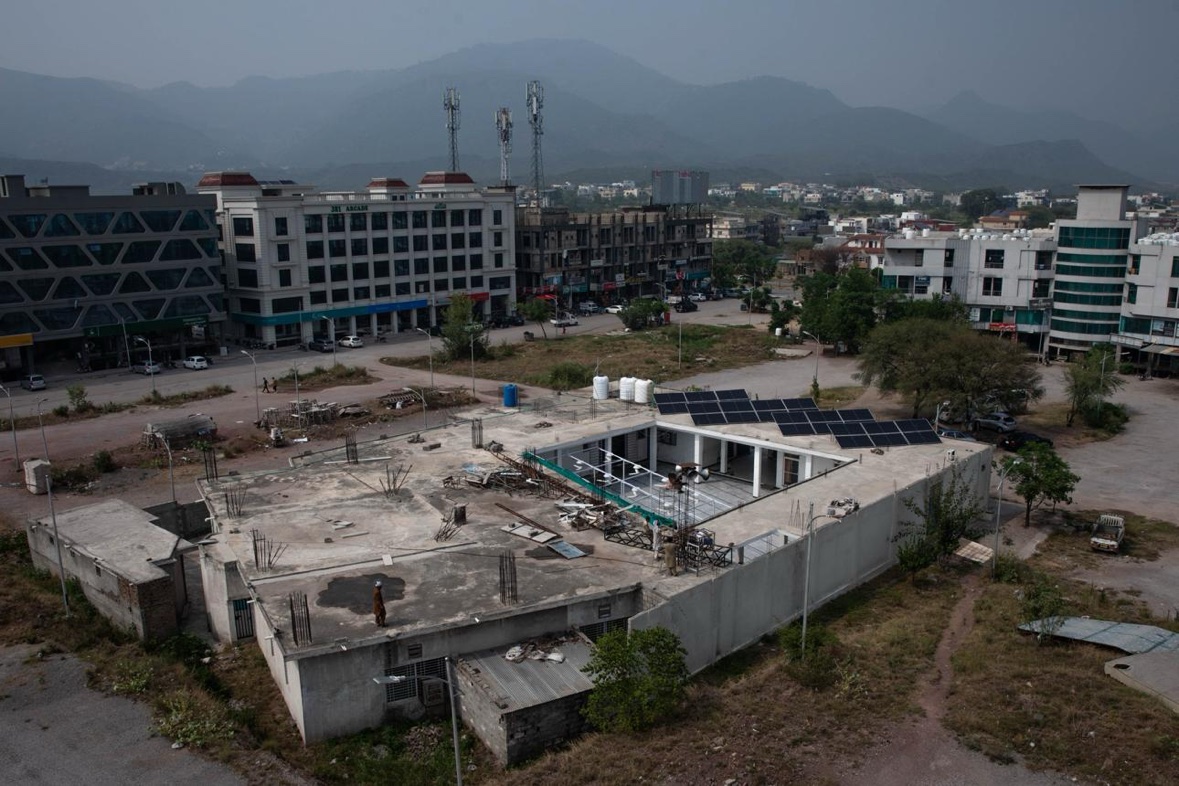
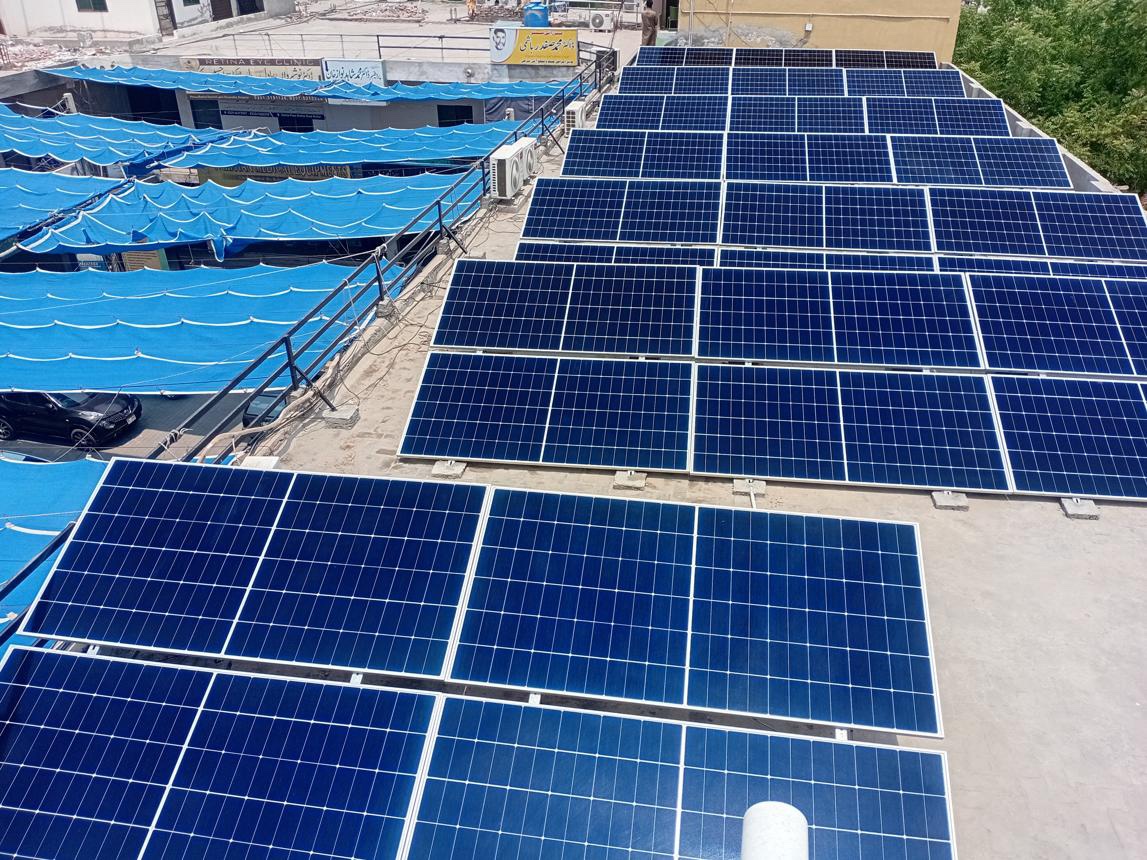
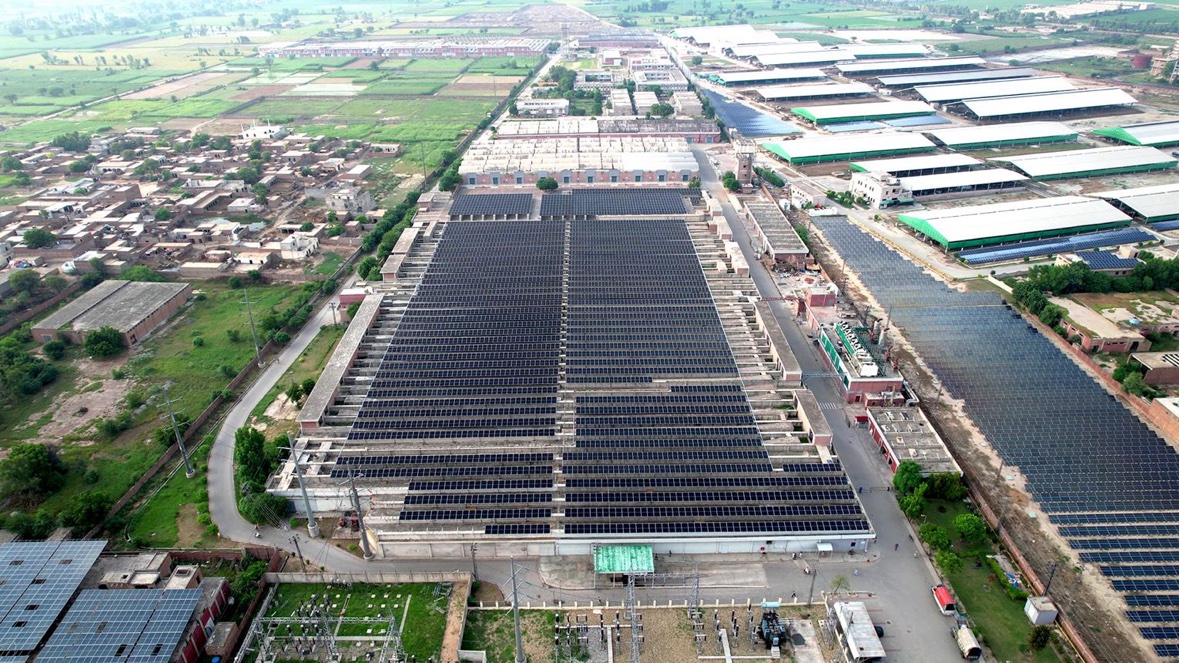
Across Pakistan, solar panels have been spreading over rooftops, factory buildings, schools, shops, and farms. In some places, the scale of the transformation is so visible that it has become a local phenomenon. In Dera Ismail Khan, drone footage published this year showed entire stretches of rooftops blanketed with panels — images Pakistani coverage has dubbed the city’s “solar revolution.”
That image captures something larger happening across the country.
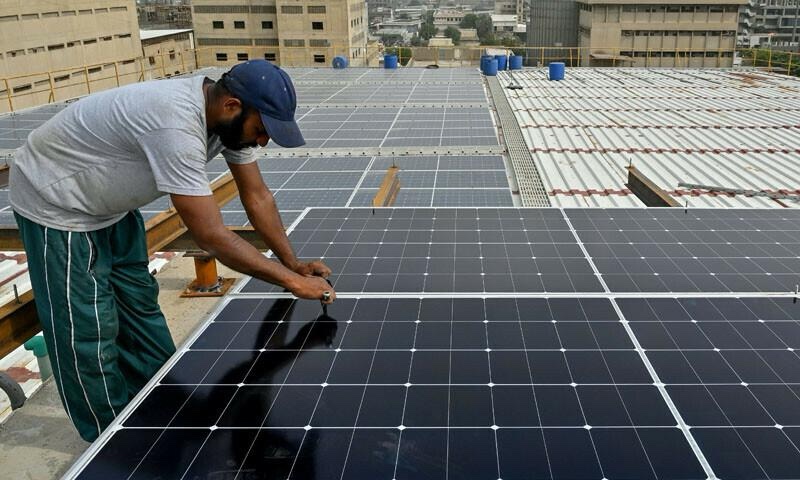
Pakistan is experiencing one of the most striking bottom-up solar shifts in the world. This is not primarily a story of giant state-owned solar farms. It is a story about households, farmers, and businesses building their own energy resilience, often because they feel they have little alternative.
And that makes Pakistan’s solar boom especially fascinating.
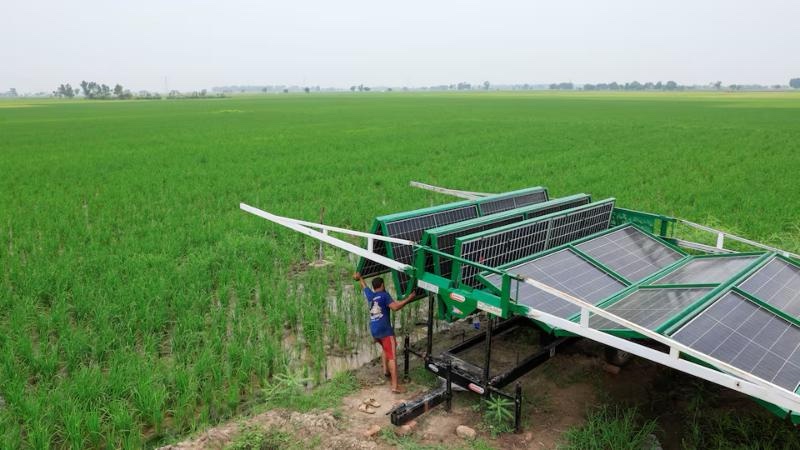
In many countries, clean-energy transitions are discussed as projects managed by governments, regulators, and large corporations. In Pakistan, the transition is increasingly being shaped by people making deeply personal economic decisions: how to keep the lights on, how to keep the fan running in the heat, how to irrigate a field, or how to stop electricity costs from swallowing household income.
A Solar Boom Measured in More Than Rooftops
The scale of the shift is remarkable.
A 2026 peer-reviewed study on Pakistan’s solar boom found that solar generation on the national grid increased fourteen-fold between 2019 and 2025, rising from 2.6 terawatt-hours to 36.6 terawatt-hours. By 2025, solar accounted for 22.5 percent of grid output. According to the same study, Ember data through March 2026 showed the surge continuing, with solar supplying 32.3 percent of total generation in the first quarter of 2026 — 12.1 of 37.5 terawatt-hours — enough to make it the single largest source on the system during that period.
Those are extraordinary numbers.
They suggest that Pakistan is not simply adding more solar at the margins. It is undergoing a significant restructuring of how electricity is produced and consumed.
But the deeper significance of the boom lies in how it is happening.
This is not a fully coordinated national master plan. It is, instead, a mixture of visible and less visible change. Some households connect solar systems through formal net metering arrangements. Others install solar primarily for self-consumption, often with batteries or partial off-grid use. Some wealthy neighborhoods have the means to install larger and better systems. In lower-income or less reliable-service areas, residents and small businesses may pursue smaller setups simply to reduce dependence on a failing system.
In other words, Pakistan’s solar revolution is happening both inside and outside the official grid framework.
Why So Many Pakistanis Turned to Solar
The reasons behind the boom are straightforward, even if the consequences are complex.
The first is affordability.
Electricity in Pakistan has become expensive for many consumers, especially as the state has faced ongoing pressure to reform the power sector, reduce subsidies, and deal with broader economic challenges. Rising tariffs have made grid electricity increasingly painful for households and businesses already managing inflation and cost-of-living strain.
The second is reliability.
For years, many Pakistanis have lived with power disruptions, load-shedding, and uncertainty about whether electricity will remain available when it is most needed. For a shopkeeper, that can mean business losses. For a household, it can mean discomfort, interrupted sleep, spoiled food, or difficulty studying and working. For farmers, it can affect irrigation and productivity.
The third is equipment cost.
Cheaper solar modules, especially from China, have made rooftop systems more accessible than they once were. Falling hardware prices have transformed solar from an aspirational green technology into a practical household and business investment.
Together, those three forces—high bills, unreliable supply, and cheaper panels—have created a powerful incentive structure.
Many people are not going solar primarily because they are climate activists.
They are going solar because the economics increasingly make sense.
The Two Pakistans of Solar
One of the most interesting insights from recent research is that Pakistan’s solar transition is not affecting all communities in the same way.
The 2026 study on Pakistan’s solar boom describes two major channels of what it calls “grid defection.”
The first is visible defection: households and businesses formally participating in net metering, reducing their grid purchases and exporting some electricity back into the system. This tends to be concentrated in better-served, higher-income areas.
The second is what the researchers call invisible defection: people using off-grid or behind-the-meter solar solutions in places where electricity service is less reliable or formal participation is more difficult. In these cases, solar may not show up as clearly in official prosumer statistics, but it still weakens dependence on the conventional grid.
That distinction matters because it reveals a larger social story.
Pakistan’s solar boom is not just a clean-energy success story. It is also a story about inequality, adaptation, and institutional trust.
People with greater resources may be able to install larger systems, benefit from formal grid arrangements, and significantly reduce their long-term power bills. Lower-income households may adopt smaller systems or remain dependent on a traditional grid whose costs are becoming harder to spread as more affluent users partially exit it.
This creates a troubling possibility: the faster wealthier users move away from paying for conventional grid power, the more financial pressure may fall on those who remain.
When Solar Success Creates a Policy Problem
This is where the story becomes politically and institutionally important.
A rapid rise in rooftop solar is good news in many ways. It can reduce pressure on fuel imports, improve resilience, cut pollution, and give citizens more control over their energy use.
But it also creates a challenge for governments and utilities built around older assumptions.
Pakistan’s power system still depends on recovering costs through the traditional grid. When large numbers of consumers begin generating more of their own electricity, that model comes under pressure. Regulators then face a difficult balancing act: how to encourage distributed solar without destabilizing utilities or shifting more costs onto non-solar users.
That tension has already become visible.
In 2026, Pakistan’s Power Division and NEPRA moved through a series of changes affecting prosumer regulations and net metering. Government press releases in August and September show that authorities were dealing with a large backlog of applications and trying to resolve pending cases tied to the revised rules. One official update said the Power Division had ordered distribution companies and the Pakistan Information Technology Company to act quickly on pending net-metering cases tied to a February 9 cut-off date. Another said that 11,695 pending cases had been resolved out of 16,654 undergoing review during the transition phase.
Those details may sound bureaucratic, but they point to something much bigger.
Pakistan’s energy bureaucracy is trying to catch up with a transition that consumers have already begun.
The Fear of a Utility Death Spiral
There is another concern beneath the policy debate: the so-called utility death spiral.
The idea is simple.
As more customers install solar and buy less electricity from the grid, utilities recover less revenue through conventional billing. To compensate, tariffs or fixed charges may rise for remaining users. That makes the grid even less attractive, encouraging more customers who can afford it to leave partially or fully. Each round of that cycle places greater pressure on the people least able to escape it.
Recent research on Pakistan’s rooftop solar transition explicitly warns about this risk. It argues that unqualified celebration of the solar boom misses the fact that rooftop adoption can privatize electricity access in a way that benefits those with capital while worsening the burden on others.
This does not mean Pakistan’s solar transition is a bad thing.
It means that success in one part of the system can create stress somewhere else unless policy is designed to address it.
If Pakistan wants a durable and fair clean-energy transition, it cannot simply rely on market momentum and individual household decisions. It needs policy that considers equity, grid finance, energy access, and the role of public infrastructure.
Why the Boom Still Matters
Despite those challenges, it would be a mistake to frame Pakistan’s solar rise as merely a regulatory headache.
It is also a remarkable example of social adaptation.
At a time when many countries are still debating how quickly they can shift toward cleaner energy, Pakistan’s households and businesses are showing what happens when economics and necessity converge. Citizens are not waiting for a perfect plan. They are acting.
That matters for the climate.
It matters for energy security.
And it matters for how the rest of the world understands clean-energy transitions in developing economies.
Too often, climate and energy reporting assumes that real change must come from high-level policy agreements, international finance packages, or megaprojects. Pakistan shows another route: decentralized, improvised, consumer-led transition.
That route is messy. It can be unequal. It can create institutional tension. But it is still real.
And in some ways, it may be faster than the top-down models experts usually imagine.
The Other Side of the Solar Story
There is also a need for caution.
Rapid adoption brings other long-term questions.
What happens when today’s solar panels and batteries reach the end of their useful life? Is Pakistan building the recycling and waste-management infrastructure needed to prevent a future environmental problem? Can distribution companies modernize fast enough to handle two-way power flows and changing demand patterns? Will rural and poorer consumers be included in the transition, or left carrying the costs of a system others are escaping?
These are not reasons to slow down clean energy.
They are reasons to take the transition seriously enough to govern it well.
A country cannot rely forever on a patchwork approach in which individual households solve their own electricity crisis one roof at a time while the broader system struggles to adapt.
The goal should not be simply more solar panels.
The goal should be a more resilient, equitable, and sustainable electricity system.
A New Model for the Global South?
Pakistan’s experience could become an important case study for the world.
Many countries across the Global South face versions of the same problem: expensive imported fuels, unreliable electricity, weak public utilities, climate vulnerability, and populations eager for practical solutions.
If cheaper solar technology allows households and businesses to move faster than national planning systems, Pakistan may be showing a future that other countries will also confront.
That future is neither entirely utopian nor entirely chaotic.
It is a hybrid model where the energy transition arrives through private decisions, public frustration, and technological affordability all at once.
And it forces governments to rethink their role.
Instead of being the sole drivers of transition, states may increasingly find themselves trying to regulate, integrate, and equalize transitions already underway.
That may be uncomfortable for traditional institutions.
But it may also be one of the defining energy stories of our time.
Pakistan’s Energy Future Is Already on the Roof
The most striking part of Pakistan’s solar revolution is not simply how fast it has happened.
It is what the boom reveals about public confidence and public need.
When millions of people begin solving their own electricity problems, they are not only adopting a new technology. They are making a statement about the old system.
They are saying the status quo is no longer good enough.
Pakistan’s rooftop panels tell a bigger story than clean energy alone. They tell a story about economic pressure, institutional limits, citizen ingenuity, and the uneven shape of modern development.
What began as a practical response to high bills and weak supply is becoming something far more consequential: a people-led restructuring of national energy life.
The challenge now is whether Pakistan can turn that rush into a system that works not just for the households that can afford solar today, but for the country as a whole tomorrow.
Because the real question is no longer whether Pakistan is going solar.
It is whether Pakistan can make this solar revolution fair, durable, and truly transformative.
Sources: Islam, W., Rosenow, J., & Amirali, A., “Pakistan’s solar boom: Visible and invisible grid defection in a high-cost, low-reliability power system,” Energy Research & Social Science (2026), incorporating Ember electricity data — as reported by pv magazine, “Prices drive Pakistan’s metered solar, outages drive hidden uptake” (October 9, 2026), https://www.pv-magazine.com/2026/10/09/prices-drive-pakistans-metered-solar-outages-drive-hidden-uptake/ ; Press Information Department, Government of Pakistan, “Power Division Moves to Expedite Net-Metering Approvals Following Regulator’s Directives” (PR No. 295, August 25, 2026) and “11,695 Pending Net Metering Applications Resolved” (PR No. 57, September 5, 2026), http://pid.gov.pk/site/press_detail/33831 ; NEPRA (Prosumer) Regulations, 2026 (S.R.O. 251(I)/2026), February 9, 2026; Dawn News coverage of Dera Ismail Khan’s solar revolution (October 2026); Heinrich Böll Foundation, “Electrification as a Development Strategy” (October 29, 2026), https://www.boell.de/en/2026/10/29/electrification-development-strategy
Read Next
Japan Is Transplanting Lab-Grown Brain Cells Into Parkinson’s Patients. Could This Change Medicine Forever? · Paying People to Leave: Inside Sweden’s Immigration Shift · What the Hell Is Sony Doing? Inside the PS5 Jailbreak War and the Fight for the Future of Gaming