
Prefer to listen instead?
Hear the full story — the job listings, billion-dollar deals, and labor fights behind Hollywood’s quiet embrace of AI, and the question underneath it all: who benefits?
Hollywood is fighting to protect its films, characters, and creative workers from artificial intelligence. Yet behind the scenes, major studios are hiring AI specialists, investing in new production tools, and quietly preparing for a different future of filmmaking. Is the industry protecting human creativity—or redefining it?
Hollywood Has an Artificial Intelligence Problem
Hollywood has spent the past several years wrestling with a technology that threatens to transform nearly every aspect of filmmaking.
Actors have demanded protections against digital replicas. Writers have fought to preserve the value of human storytelling. Studios have challenged technology companies over the unauthorized use of copyrighted films, characters, and other creative material.
Artificial intelligence has become one of the industry’s most controversial subjects.
Yet behind the public debates, something else is happening.
Hollywood is investing in the very technology that has generated so much concern.
Film studios are recruiting engineers to develop AI-powered production systems. Executives are experimenting with tools capable of accelerating visual effects, dubbing, animation, and editing. Technology companies are approaching Hollywood’s largest entertainment businesses with proposals to license valuable film libraries for artificial intelligence.
The result is an industry experiencing a peculiar contradiction.
Hollywood wants to protect its creative identity from artificial intelligence while simultaneously exploring how AI could transform its business.
This is not necessarily evidence of a coordinated effort to replace human artists. The motivations are considerably more complicated.
But the growing divide between public caution and internal technological investment raises questions about the future of filmmaking.
Who benefits when a studio can automate portions of production?
What happens to the people whose careers depend on those tasks?
And will audiences eventually recognize the difference between films created with AI assistance and those produced through more traditional methods?
The Job Listings That Revealed Hollywood’s Strategy
One of the clearest indications of Hollywood’s growing investment in AI emerged in July 2026.
An investigation by the Los Angeles Times examined approximately 250 public job listings from major entertainment studios and identified roughly 30 positions that appeared connected to artificial intelligence.
The findings suggested that AI was becoming a significant part of the industry’s recruitment strategy.
Some openings focused on developing new production technologies.
Others involved machine learning, audience analytics, marketing, animation, visual effects, and automated workflows.
Disney, Netflix, and Amazon MGM Studios were among the companies recruiting for positions associated with AI’s potential creative applications.
Other major entertainment companies appeared to be investing in AI for business operations, distribution, marketing, and intellectual-property protection.
The distinction matters.
Hiring an engineer to develop more efficient visual effects does not necessarily indicate plans to eliminate actors or writers.
Similarly, using machine learning to analyze audience behavior is substantially different from generating an entire film using artificial intelligence.
Nevertheless, the listings reveal a clear industry trend.
Major entertainment companies are preparing to integrate AI into increasingly important parts of their operations.
And rather than waiting for the technology to mature outside their organizations, some are building the expertise internally.
Netflix’s $587 Million Bet on AI Filmmaking
Netflix provides one of the most striking examples of Hollywood’s changing relationship with artificial intelligence.
In March 2026, the streaming company acquired InterPositive, an AI filmmaking technology company founded by actor and director Ben Affleck.
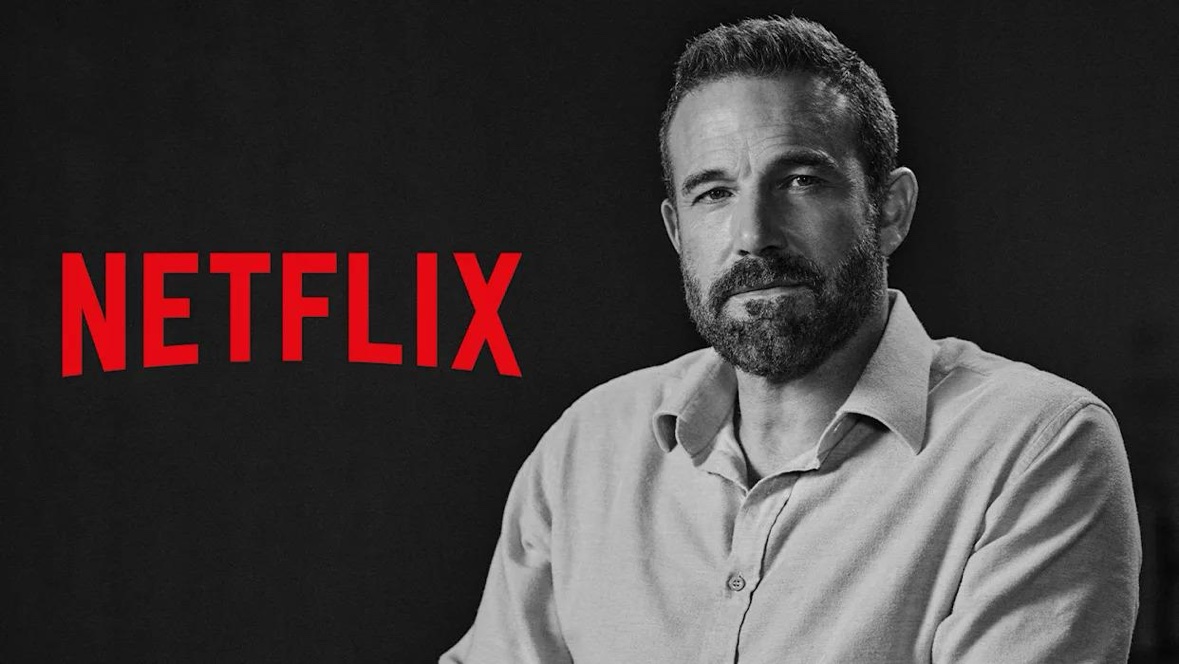
Financial disclosures later revealed that Netflix paid approximately $587 million in cash for the company.
The acquisition was significant not merely because of its price.
It demonstrated that a major entertainment platform considered proprietary AI filmmaking technology valuable enough to purchase outright.
InterPositive’s approach focuses on developing tools that can assist filmmakers during production and post-production.
Such technology may help creative professionals manipulate footage, refine visual elements, or complete technical tasks that traditionally require considerable time and resources.
Supporters argue that these tools can allow filmmakers to spend less time on repetitive technical work and more time making creative decisions.
But the economic implications are difficult to ignore.
If a production can complete certain tasks faster and with fewer personnel, the benefits may extend directly to a studio’s financial performance.
Whether those efficiencies translate into better working conditions, new creative opportunities, or fewer jobs will depend on how the technology is implemented.
Netflix’s acquisition illustrates why Hollywood is taking AI seriously.
For major studios, artificial intelligence is no longer merely an experimental novelty.
It is becoming a strategic investment.
Disney’s Complicated Relationship With AI
Few companies illustrate Hollywood’s conflicting priorities better than Disney.
The entertainment giant controls some of the world’s most recognizable intellectual property, including characters and franchises associated with Pixar, Marvel, and Star Wars.
Protecting those assets is central to its business.
At the same time, Disney has explored artificial intelligence across multiple operations, including production technology, sound, visual effects, and internal software development.
A December 2025 agreement with OpenAI initially proposed allowing certain Disney characters to appear in user-generated AI videos through Sora.
The arrangement also contemplated a substantial financial investment.
However, the deal collapsed in March 2026 after OpenAI announced it was shutting down Sora; the planned $1 billion equity investment never closed, and no money changed hands.
The changing relationship demonstrated how quickly Hollywood’s AI strategies can evolve.
Meanwhile, Disney has continued recruiting technical specialists in fields involving computer graphics, machine learning, and production innovation.
Its visual effects and audio divisions have explored how emerging technologies could improve established creative workflows.
The broader contradiction is less about hypocrisy than competing business interests.
Disney has strong incentives to prevent unauthorized replication of its valuable characters.
It also has incentives to use appropriately licensed technology to improve production efficiency and develop new entertainment experiences.
Those interests can coexist.
But they raise an important question about who will have access to the technology and the creative material needed to use it effectively.
If major studios can license enormous libraries of copyrighted content to train or operate AI systems, independent creators may find themselves competing in an increasingly unequal technological marketplace.
The Rise of AI Filmmaking Studios
Hollywood’s transformation is not confined to established entertainment companies.
A growing ecosystem of AI-focused production businesses is emerging around Los Angeles.
In October, the Los Angeles Times reported that Culver City, already home to major entertainment operations, was becoming a center for new AI filmmaking startups.
These companies are experimenting with tools for commercials, short-form entertainment, visual effects, and hybrid productions combining conventional filmmaking with generated imagery.
The movement reflects a broader shift in the technology’s capabilities.
Earlier generations of generative video software frequently produced distorted anatomy, inconsistent movement, and unrealistic results.
More recent systems have become increasingly capable of generating visually convincing footage, although continuity, creative control, technical reliability, and legal clearance remain significant challenges.
For independent filmmakers, these tools may open possibilities that previously required expensive equipment or large production teams.
A small studio might use generative technology to visualize environments, experiment with storyboards, or develop proof-of-concept footage before committing to a full production.
For established studios, similar tools could reduce the time needed for certain production processes.
But the same capabilities create concerns for people who make a living performing those tasks.
The technology that helps an independent filmmaker realize an ambitious idea might also allow a larger company to reduce spending on human labor.
Artificial intelligence is therefore both a potential creative equalizer and a possible source of economic disruption.
Its consequences will vary depending on who controls the tools and how they are used.
What Happens to Actors When Performances Can Be Generated?
One of the most contentious questions surrounding AI concerns the future of human performance.
Modern digital production already allows filmmakers to modify faces, reconstruct environments, and manipulate visual elements in ways that would have been extraordinarily difficult in previous decades.
Generative AI extends those capabilities.
It introduces the possibility of producing synthetic performances, creating digital characters, and reproducing elements of an actor’s appearance or voice.
For performers, this creates concerns about consent, compensation, and control.
An actor might agree to participate in one project without wanting their likeness reused in unrelated productions.
A voice performer might consent to a particular dubbing process without agreeing to have a synthetic version of their voice made available indefinitely.
These questions became central to Hollywood’s labor negotiations.
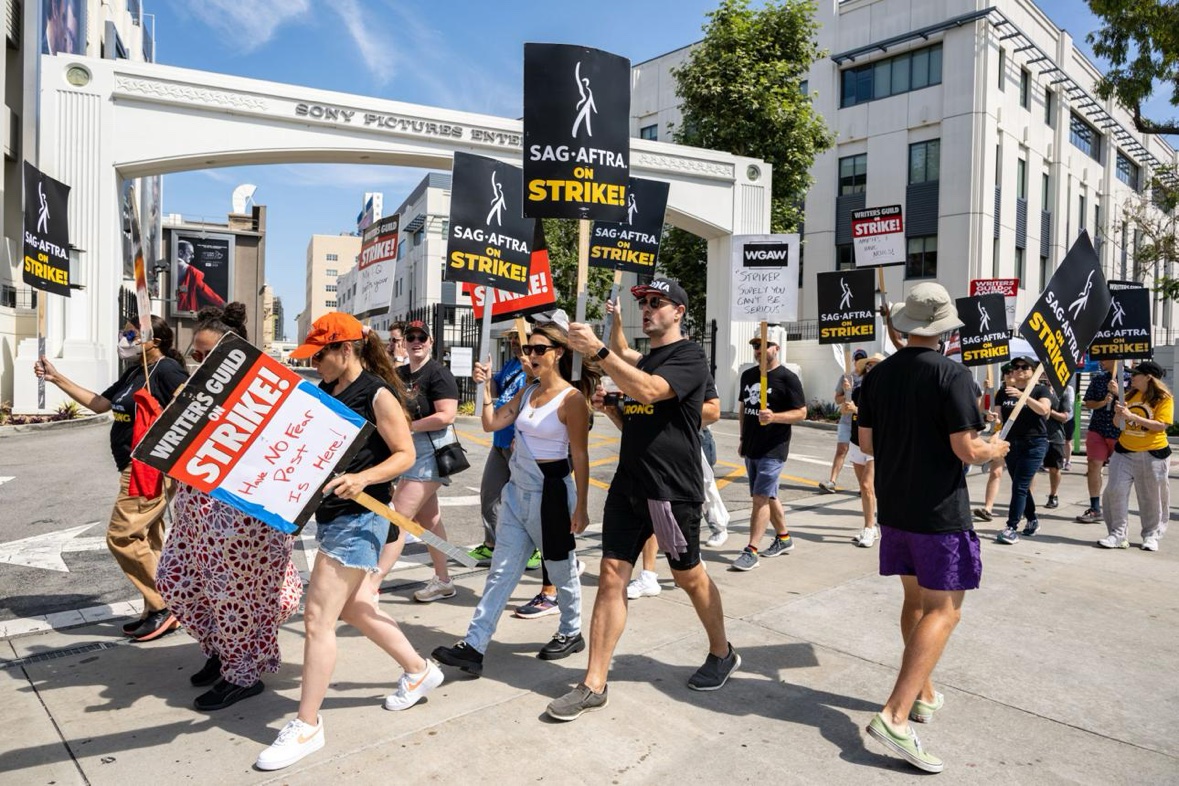
In June 2026, members of SAG-AFTRA ratified a new television and theatrical agreement strengthening protections concerning digital replicas and synthetic performers.
The agreement established additional requirements affecting the use of artificially generated performances and reinforced the industry’s stated preference for human performers.
The union’s position reflects a principle that extends beyond entertainment.
A person’s identity and creative labor should not automatically become unrestricted commercial resources simply because technology makes replication possible.
However, the contractual safeguards do not mean AI-generated performances will disappear from filmmaking.
They establish conditions and limitations governing certain uses.
The challenge is ensuring those protections remain meaningful as the technology continues developing.
Writers Are Fighting for Control of Storytelling
Actors are not the only creative professionals facing uncertainty.
Screenwriters have also been concerned about how generative AI could affect their profession.
Large language models can generate dialogue, summarize scripts, suggest story structures, and produce material resembling conventional screenwriting.
The existence of those capabilities does not mean the technology can reliably replace the judgment, originality, and collaborative experience of professional writers.
But it does create economic pressure.
If studios begin treating AI-generated material as a substitute for some stages of writing, the opportunities available to working writers could change.
The Writers Guild of America negotiated significant AI protections during its 2023 agreement and expanded those protections in 2026.
The guild has emphasized that AI-generated material should not undermine writers’ contractual rights, compensation, or professional recognition.
Still, the industry’s use of AI is evolving beyond the narrow question of whether a chatbot can write a screenplay.
In June 2026, producer Brian Grazer discussed using Anthropic’s Claude to help develop early story ideas before involving a human writer.
That example illustrates a more complex future in which AI may participate in development without necessarily replacing the writer responsible for the finished work.
For some creators, such tools may function as a form of brainstorming assistance.
Others worry that the practice could reduce the perceived value of human creative development.
The distinction between assistance and substitution will likely remain one of Hollywood’s defining debates.
Lionsgate Is Betting on a Different Production Model
Some entertainment companies are moving beyond experimentation.
In June 2026, Lionsgate expanded its partnership with generative AI company Runway.
The agreement included an equity investment and plans to jointly develop new entertainment projects incorporating AI technologies.
The companies announced a development initiative intended to produce original intellectual property, beginning with short-form episodic content using elements from Lionsgate’s existing library.
The partnership illustrates how AI companies and traditional studios may become increasingly interconnected.
Technology developers need access to professional creative expertise, recognizable intellectual property, and commercial distribution networks.
Studios, meanwhile, are interested in technologies that might reduce production costs or enable new storytelling formats.
These relationships offer both parties potential advantages.
But they also raise questions about the future organization of production.
Will AI primarily become another tool used by established artists?
Will entertainment companies establish entirely new production divisions built around generative content?
Or will automated systems gradually absorb tasks traditionally performed by animators, editors, visual effects specialists, and other creative workers?
The answers remain uncertain.
What is clear is that companies are already investing in those possibilities.
The Copyright Battle Is Also a Business Negotiation
Hollywood’s public conflict with artificial intelligence companies often centers on copyrighted material.
Generative AI systems can be developed using enormous collections of text, images, sound, and video.
Entertainment companies have raised concerns about whether their films, television programs, and characters can be used without authorization.
But the emergence of potential licensing agreements complicates the narrative.
In August 2026, the Los Angeles Times reported that Google had approached several major studios about licensing their intellectual property for AI-related uses.
The reported discussions involved companies including Disney, Universal, and Warner Bros. Discovery.
No agreements had been finalized at the time of that reporting.
Nevertheless, the conversations revealed an important economic possibility.
Hollywood’s extensive film libraries could become valuable resources in the emerging AI economy.
A studio might oppose unauthorized use of its copyrighted material while accepting compensation for specifically licensed uses.
From a business perspective, those positions are not inherently contradictory.
The question is whether licensing arrangements adequately account for the contributions and rights of the actors, writers, directors, musicians, and other workers whose efforts created the original material.
An entertainment company may control a film’s distribution rights without necessarily possessing unrestricted rights over every person’s likeness, voice, or creative contribution.
That distinction could become increasingly important as AI licensing evolves.
Will AI Make Movies Better?
For audiences, the central question may be simpler.
Will artificial intelligence actually improve the movies they watch?
Supporters envision a future in which filmmakers have access to more powerful creative tools.
Independent directors could develop sophisticated visual effects without enormous budgets.
Small production companies could experiment with ambitious environments and complex imagery.
Editors and animators could automate repetitive work while maintaining creative control over the finished product.
Used thoughtfully, AI could expand what filmmakers are capable of achieving.
But technological capability does not automatically produce compelling storytelling.
Film is more than a sequence of convincing images.
It depends on performance, rhythm, narrative structure, emotional interpretation, and the creative decisions made throughout production.
A visually impressive scene can still feel empty if the story surrounding it lacks substance.
There is also the possibility that an industry obsessed with efficiency could use AI to produce more content without necessarily producing more meaningful art.
Hollywood already faces criticism over formulaic storytelling, franchise dependence, and commercial risk aversion.
Artificial intelligence could amplify those tendencies if companies primarily use it to imitate proven formulas.
Alternatively, it could help independent creators experiment with ideas that traditional studio financing might reject.
The technology itself does not determine which direction the industry takes.
Those decisions will be made by the people and organizations controlling its deployment.
The Real Question Is Who Benefits
Hollywood’s AI transformation is often framed as a conflict between technological progress and creative resistance.
But that framing oversimplifies the issue.
Many filmmakers and creative workers are interested in new technology.
The entertainment industry has repeatedly evolved through innovations in sound recording, editing, animation, computer-generated imagery, and digital production.
Resistance to particular AI practices is not necessarily resistance to technological development.
It may reflect concerns about consent, compensation, attribution, and the concentration of economic power.
If AI helps a small filmmaker create a project that would otherwise be impossible, that represents one kind of outcome.
If it enables a major studio to reduce employment while retaining most of the financial benefits, that represents another.
Both scenarios can emerge from similar technologies.
This is why Hollywood’s labor agreements, licensing negotiations, and corporate investment decisions deserve as much attention as the technical capabilities of AI systems.
The future of filmmaking will not be determined by software demonstrations alone.
It will also depend on how the industry distributes the benefits and costs of automation.
Hollywood’s Next Act
Artificial intelligence is no longer a distant possibility for the entertainment industry.
It is appearing in hiring strategies, corporate acquisitions, production partnerships, and labor negotiations.
Hollywood is investing in AI while attempting to establish boundaries around its use.
That balancing act is likely to become increasingly difficult as the technology develops.
Studios want greater efficiency and new commercial opportunities.
Workers want meaningful protections for their livelihoods and creative identities.
Technology companies want access to intellectual property and markets that can support increasingly sophisticated tools.
And audiences want films that remain emotionally engaging, original, and worth watching.
These interests do not always align.
Yet the decisions being made today could establish the rules governing filmmaking for decades.
Perhaps the greatest misunderstanding about Hollywood’s AI debate is the assumption that the industry must either embrace artificial intelligence completely or reject it outright.
The more realistic question is what kind of creative economy Hollywood intends to build around it.
A future where AI expands opportunities for filmmakers would look very different from one where creative labor is treated primarily as an expense to be eliminated.
Both possibilities deserve serious attention.
For now, Hollywood’s double life continues.
The industry is fighting over the boundaries of artificial intelligence while quietly developing the expertise to make it part of everyday production.
And as studios prepare for a future increasingly shaped by automated technology, one question remains impossible to ignore:
If artificial intelligence becomes an essential part of filmmaking, will it give artists more power to create—or give studios more power over the artists themselves?
Sources and Further Reading
Los Angeles Times — Hollywood Fights AI in Public While Quietly Building It Into Movies (July 26, 2026)
Los Angeles Times — As Hollywood Fights AI, a New Filmmaking Hub Takes Shape in Culver City (October 16, 2026)
Los Angeles Times — Hollywood Studios Have Sued Over AI. Now Google Is Courting Them to Use Its Tools (August 31, 2026)
SAG-AFTRA — Members Approve 2026 TV/Theatrical Contracts (June 4, 2026)
Writers Guild of America — Artificial Intelligence Contract Protections (Updated October 30, 2026)
Runway — Lionsgate Expands AI Partnership (June 11, 2026)
Los Angeles Times — As Hollywood leans into AI, the real battle is over likeness and who gets paid (June 19, 2026)
Photos: Netflix; Runway / Lionsgate; picket-line photo from the 2023 SAG-AFTRA and WGA strikes.
Read Next
You Can See Everything, Except the Truth
Kendrick Lamar’s GNX: The Album That Reclaimed the West
What the Hell Is Sony Doing? Inside the PS5 Jailbreak War and the Fight for the Future of Gaming
Leave a Reply