Prefer to listen instead?
Hear the full story — inside the race to save a century of recordings, performances, and photographs before the formats that hold them disappear.
Inside the New York Public Library’s $60 million effort to preserve rare recordings, historic performances, forgotten photographs, and the cultural memories at risk of disappearing forever.
The History We Almost Never Hear
Imagine hearing a jazz legend experimenting with a melody that never appeared on a commercially released album.
Or discovering a recording of a Broadway performance that has not been seen or heard by the public in decades.
Imagine listening to the voices of performers who helped shape American culture, their words preserved on fragile recordings created long before modern digital technology existed.
These are not simply scenes from a historical documentary. They represent the extraordinary possibilities hidden inside America’s cultural archives.
And some of those materials are running out of time.
At the New York Public Library for the Performing Arts at Lincoln Center, an ambitious effort is underway to preserve historic recordings, photographs, films, manuscripts, and other cultural artifacts before physical deterioration makes them inaccessible.
In September 2026, the institution announced a historic $60 million donation, the largest single gift in its history, to support preservation, digitization, and expanded public access to its collections.
The library holds more than 15 million items documenting generations of music, theater, dance, and artistic expression.
Yet many of those items exist on fragile physical formats that were never intended to last forever.
For the archivists and preservation specialists responsible for protecting these collections, the challenge is becoming increasingly urgent.
The race is not simply about saving old recordings.
It is about preserving the sounds, performances, and cultural experiences that help explain who we are.
A $60 Million Investment in Cultural Memory
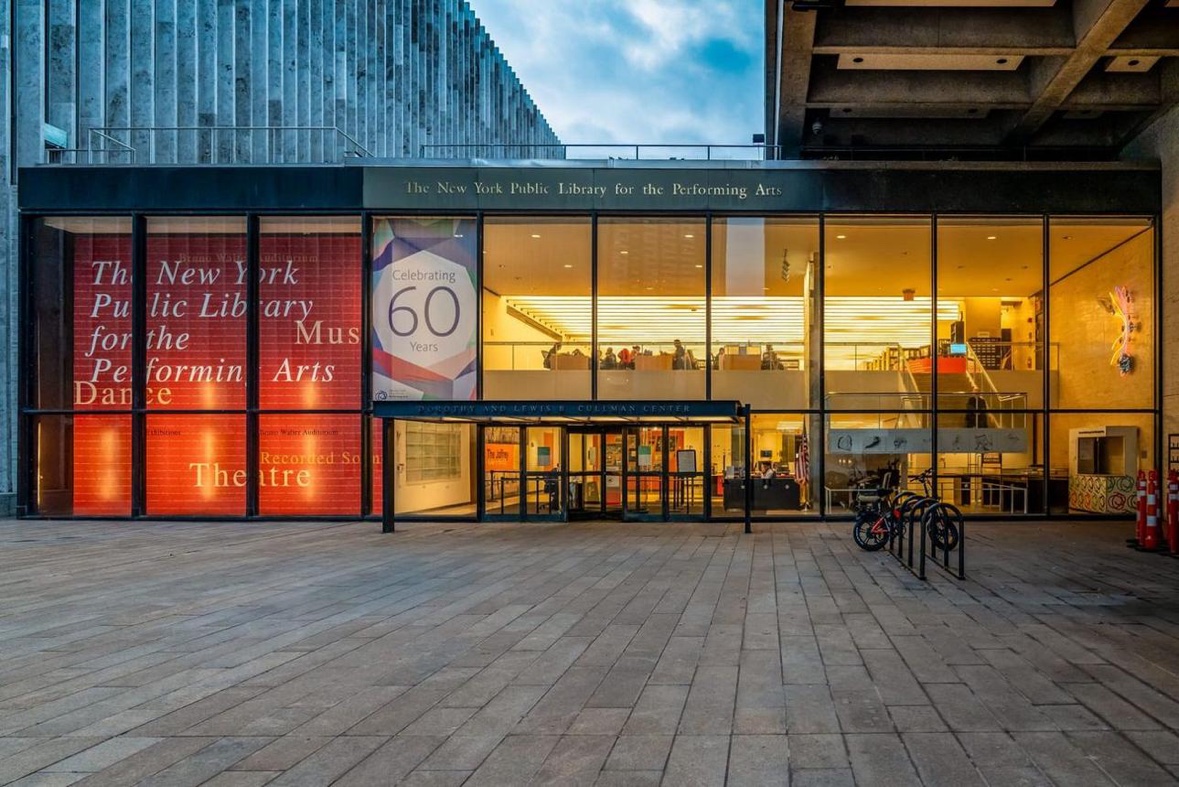
Established in 1965, the New York Public Library for the Performing Arts has become one of the world’s most significant research institutions dedicated to music, theater, dance, and recorded sound.
Located at Lincoln Center in Manhattan, the library serves researchers, performers, historians, students, and members of the public interested in exploring the history of artistic expression.
Its collections contain material spanning centuries, from early musical manuscripts to recordings documenting contemporary performances.
But preserving a collection of this magnitude presents enormous challenges.
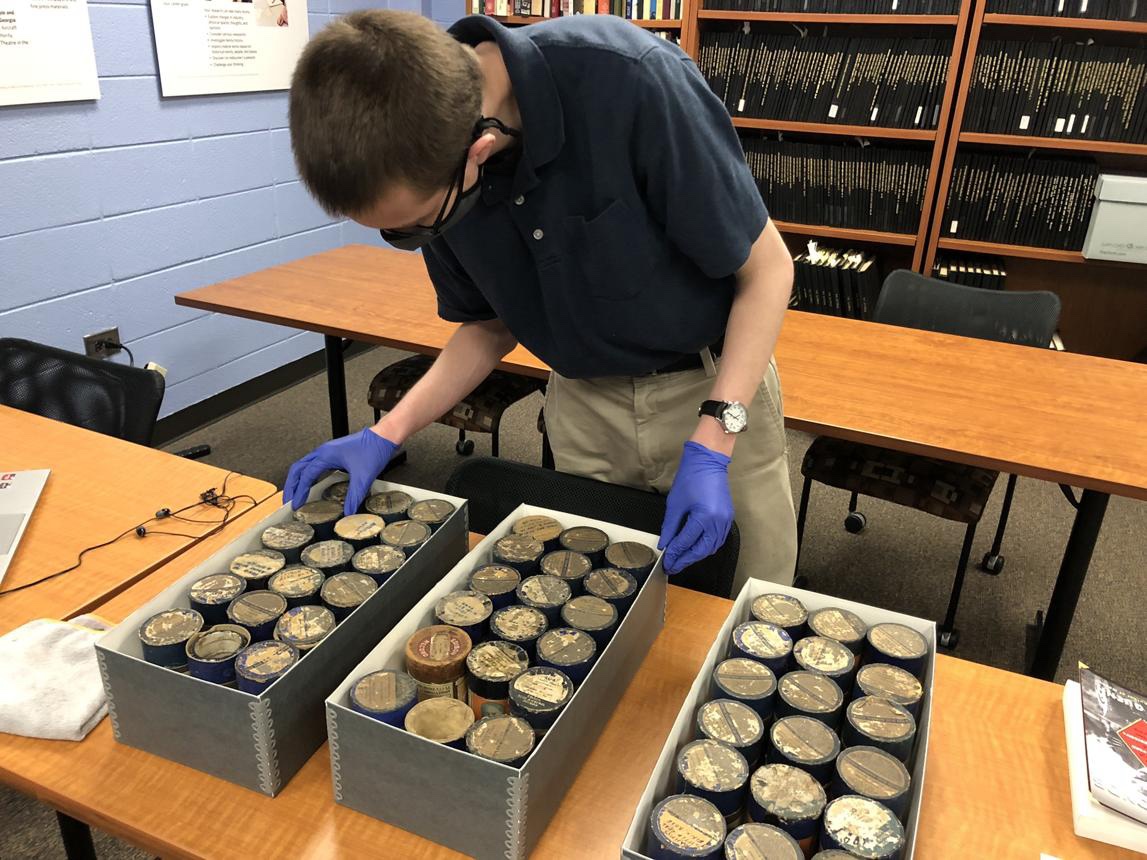
Historical film can deteriorate chemically. Magnetic tape can become difficult to play safely. Early photographs can fade, crack, or suffer damage. Audio formats such as wax cylinders and lacquer discs require specialized care and playback equipment.
Without intervention, some of these materials risk becoming impossible to reproduce or study.
The anonymous $60 million donation announced in September is intended to help address those challenges.
According to the New York Public Library, the initiative will support large-scale digitization, preservation, and cataloging while strengthening the digital systems needed to make historical materials accessible online.
The investment also represents a shift in how cultural institutions approach preservation.
Rather than treating archives primarily as physical spaces that researchers must visit, digitization can make collections available to people regardless of geography.
A music student in Tokyo, a historian in London, or an independent researcher in Florida could eventually access materials that previously required a visit to New York.
However, digitization is neither instantaneous nor guaranteed to make every item available online. Copyright restrictions, technical limitations, and the scale of the collection will continue influencing what can be shared.
Nevertheless, the initiative represents an important effort to make cultural history more accessible.
The Recordings That Could Disappear
Among the most vulnerable materials identified by the library are tens of thousands of rare recordings stored on wax cylinders and lacquer discs.
These formats played important roles in the early development of recorded sound.
Wax cylinders, popular during the late nineteenth and early twentieth centuries, captured audio through grooves engraved into cylindrical surfaces.
Lacquer discs later became important for recording radio broadcasts, musical performances, and studio sessions.
Unlike modern digital audio files, these recordings depend on physical materials that can deteriorate over time.
The library’s preservation initiative will also address hundreds of thousands of other analog recordings and audiovisual materials.
Some contain performances that have never been commercially released.
Among the notable examples identified by the library are unreleased test pressings associated with influential jazz musicians, including Louis Armstrong, Chet Baker, and Dave Brubeck.
These recordings offer something particularly exciting for music historians.
They may preserve alternative performances, previously unheard interpretations, or other evidence of an artist’s creative process.
An unreleased recording can reveal how musicians experimented before arriving at the version audiences eventually heard.
For researchers, those differences can provide valuable insights into musical innovation and the evolution of particular styles.
For listeners, they offer the possibility of experiencing familiar artists in entirely unfamiliar ways.
The importance of preserving these materials becomes even clearer when considering the Rodgers and Hammerstein Archives of Recorded Sound.
Established in 1965, the archive holds more than 700,000 audiovisual recordings and related materials documenting the history of recorded sound from the late nineteenth century to the present.
Its collections demonstrate that the history of music extends far beyond the recordings available on contemporary streaming platforms.
Some of the most important pieces of that history survive only because archivists recognized their value and worked to preserve them.
When the Past Exists on Technology We No Longer Use
One of the greatest challenges facing preservation specialists is technological obsolescence.
Audio recordings and films are often dependent on specific equipment designed for the formats on which they were created.
As technologies evolve, older playback devices become increasingly difficult to maintain.
Replacement parts disappear. Specialized knowledge becomes less common. Manufacturers discontinue equipment.
Eventually, institutions can find themselves possessing recordings that physically exist but cannot be easily played.
Consider the Mapleson Cylinders, one of the remarkable historical collections associated with the New York Public Library.
Between 1901 and 1909, Lionel Mapleson recorded rehearsals and performances at the Metropolitan Opera using brown wax cylinders.
His recordings also included personal material featuring members of his family.
These recordings provide rare evidence of how opera sounded during the earliest years of recorded music.
The New York Public Library acquired the cylinders between 1939 and 1962.
They were transferred to analog tape in 1981 and subsequently released as a five-LP collection in 1985.
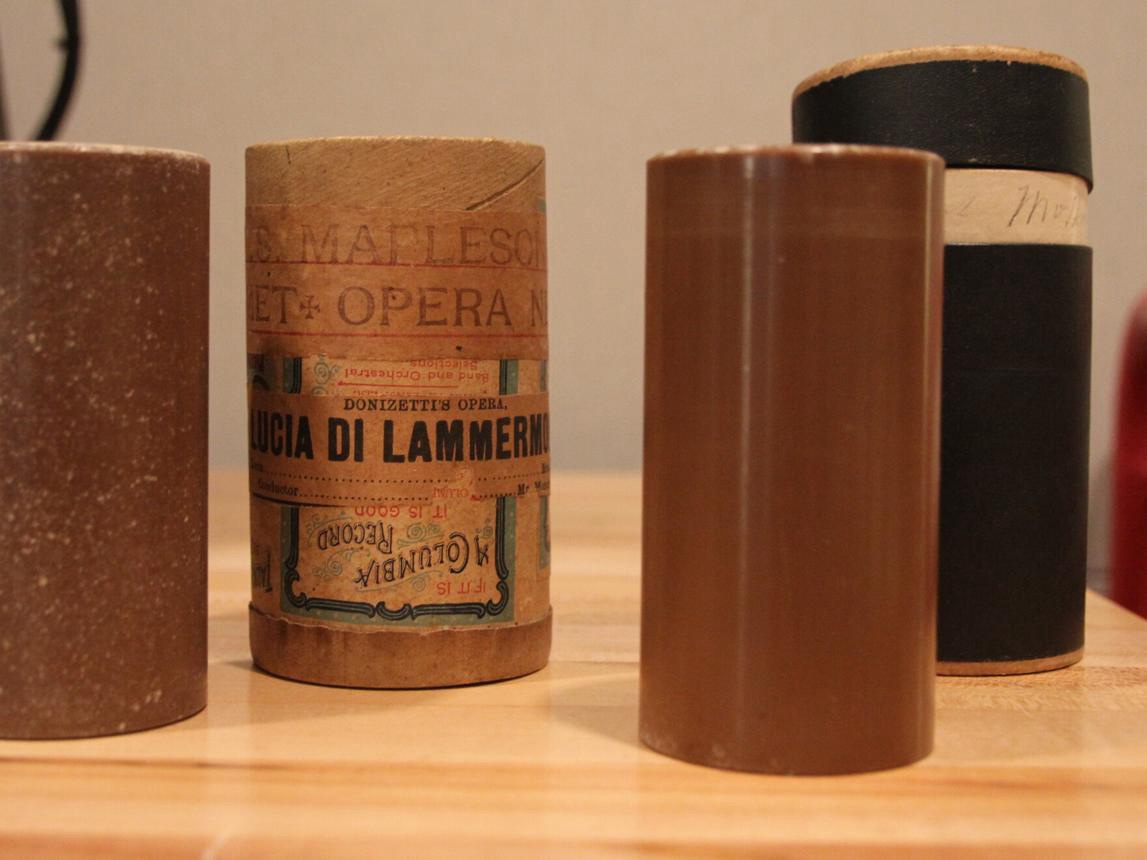
Their survival demonstrates the importance of transferring aging recordings into formats that remain accessible.
Without preservation work, the historical value of these recordings could have been compromised by deterioration or the disappearance of compatible playback equipment.
The same challenge now confronts countless other historical materials.
And while modern technology has made digitization increasingly sophisticated, transferring an old recording is not necessarily simple.
Archivists must carefully evaluate the physical condition of each item, determine appropriate playback methods, and capture the recording without introducing unnecessary damage.
They must also preserve information about the recording itself, including its origin, date, format, and historical context.
Because the sound alone is not always the entire story.
The Forgotten History of Broadway
The preservation effort extends beyond audio recordings.
One of its most significant priorities involves millions of historical photographs, including the White Studio archive.
During the early twentieth century, White Studio photographed more than 85% of Broadway productions, creating an extraordinary visual record of American theater.
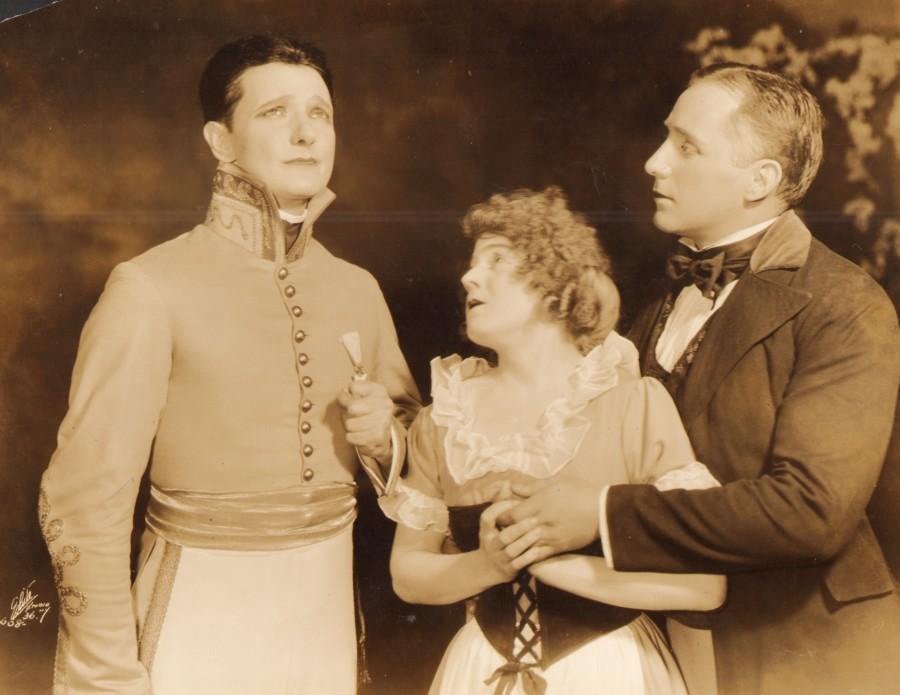
Its collection captures performances, productions, costumes, and theatrical personalities from an era when moving-image documentation was far less common.
For historians, these photographs offer invaluable evidence of how stage productions looked and how theatrical styles evolved.
For contemporary performers and designers, they provide opportunities to study earlier generations of artistic work.
But photographic preservation presents its own difficulties.
Many historical negatives were produced using cellulose acetate, a material vulnerable to chemical deterioration.
As the material ages, it can shrink, distort, and become increasingly fragile.
Other photographic formats, including glass plates and early color slides, require specialized storage and conservation practices.
Without adequate preservation, details captured more than a century ago could eventually disappear.
The library’s new funding will help address these challenges by supporting digitization and conservation of vulnerable visual collections.
The goal is not merely to retain photographs as historical objects.
It is to ensure that future audiences can continue learning from the performances and artistic traditions they document.
The Performances That Were Never Supposed to Last Forever
Unlike books or paintings, performing arts are inherently temporary.
A theatrical production exists in a particular place and moment.
A dance performance unfolds through movement, expression, and interpretation.
A musical performance changes depending on the musicians, audience, and circumstances surrounding it.
When the performance ends, the experience survives primarily through memory and documentation.
This makes audiovisual preservation especially important.
Beginning in 1970, the New York Public Library for the Performing Arts recorded dance and theater performances as well as oral histories documenting the experiences of performers and creative professionals.
These collections provide rare opportunities to study artistic traditions that might otherwise exist only through written descriptions.
An archival recording can reveal how a choreographer approached movement, how actors interpreted particular roles, or how a stage production changed over time.
Such materials can help contemporary artists understand the work of previous generations.
They also offer historians evidence that might challenge or expand established narratives about cultural history.
Preservation therefore serves more than a nostalgic purpose.
It supports scholarship, artistic development, and historical understanding.
And in an era when digital platforms increasingly determine which cultural materials remain visible, preserving independent archival collections becomes even more significant.
Digitization Is Not as Simple as Pressing a Button
It is tempting to imagine digitization as a straightforward process.
Insert an old recording into a machine, convert it into a computer file, and the problem is solved.
In reality, preservation is considerably more complicated.
Different formats require different equipment and handling procedures.
Fragile recordings may need conservation treatment before they can be played safely.
Historical film may require cleaning, inspection, and specialized scanning.
Audio restoration can involve balancing the desire to reduce unwanted noise against the responsibility to preserve the integrity of the original recording.
Once material has been digitized, the work is far from finished.
Digital preservation requires reliable storage, multiple backups, file-integrity monitoring, consistent metadata, and ongoing migration to supported technologies.
Without proper management, digital files can become corrupted, inaccessible, or effectively lost within poorly organized systems.
This introduces a paradox.
Digitization can rescue cultural material from deteriorating physical formats, but the digital copies themselves require continuous maintenance.
A file preserved today cannot simply be forgotten for another hundred years.
Institutions must plan for changes in storage media, software, file formats, and access systems.
That makes the New York Public Library’s investment in digital infrastructure particularly important.
The initiative is not limited to producing digital copies of historical materials.
It also seeks to establish the systems necessary to preserve, organize, and provide access to those materials over time.
In other words, the library must protect both the historical recordings and the technological environment needed to keep them usable.
The Bigger Problem: Who Decides What History Survives?
The race to preserve historical media raises questions that extend far beyond New York.
Cultural preservation is often determined by resources.
Institutions with substantial funding can employ preservation specialists, purchase advanced equipment, and develop long-term digital storage systems.
Smaller archives, independent museums, local historical societies, and community organizations may face the same deterioration challenges without comparable financial support.
This creates a troubling possibility.
The cultural materials most likely to survive may not always be those with the greatest historical importance.
They may simply be those belonging to institutions with the resources to preserve them.
Community recordings, independent music collections, regional performances, and personal archives can contain extraordinary historical information.
Yet these materials may remain vulnerable when preservation funding is unavailable.
The consequences extend into how future generations understand their own history.
An incomplete archive can create an incomplete historical narrative.
If certain artists, communities, or cultural movements are poorly documented, their contributions may become harder to recognize.
Preservation therefore involves questions of representation and public access.
Whose stories are considered worth saving?
Which artistic traditions receive institutional attention?
And what happens to cultural history that exists outside major museums, universities, or libraries?
The New York Public Library’s initiative provides one example of how substantial investment can address these problems.
But the broader challenge remains much larger than any individual institution.
What This Means in the Age of Streaming
There is an irony in discussing the disappearance of historical recordings during an era when virtually every modern song, film, and television program appears to be available instantly.
Streaming services have made entertainment more accessible than previous generations could have imagined.
But that convenience has also changed how people understand ownership and preservation.
A song available on a streaming platform today may disappear tomorrow because of licensing changes.
Films can be removed from digital catalogs.
Online services can shut down.
Digital storefronts can become inaccessible as companies change their business models.
Although modern digital media does not deteriorate in precisely the same way as wax cylinders or film negatives, access to it can still be fragile.
The distinction between owning a physical object and holding a license to access digital content has become increasingly important.
This issue is particularly visible in the video game industry, where discontinued online services and changing hardware platforms can make older games difficult to obtain or play.
It also affects independent musicians, filmmakers, and digital creators whose work may exist primarily on commercial platforms.
The broader lesson is that technological convenience should not be confused with permanent preservation.
Making something available today does not guarantee that it will remain accessible decades from now.
And that raises a responsibility shared by cultural institutions, technology companies, artists, and consumers.
If digital culture is to survive, preservation must be treated as an ongoing commitment rather than an afterthought.
Why Saving the Past Matters for the Future
The New York Public Library’s preservation initiative arrives at a moment when technological innovation dominates public conversation.
Artificial intelligence, streaming services, digital distribution, and increasingly sophisticated consumer devices promise new ways to create and experience media.
Yet while society focuses on what technology will make possible tomorrow, enormous portions of yesterday’s cultural history remain at risk.
The contrast is striking.
We have developed systems capable of generating realistic synthetic voices, yet original recordings of historical performers still require urgent preservation.
Modern cameras can capture extraordinary detail, yet photographs documenting some of Broadway’s earliest productions are deteriorating.
Digital platforms distribute music to millions of listeners, yet rare recordings from influential musicians remain unavailable because they survive only on fragile physical media.
This is not an argument against technological progress.
It is an argument for directing some of that progress toward preserving cultural memory.
Technology becomes more meaningful when it allows future generations to understand the creative achievements of those who came before them.
And preservation provides opportunities for contemporary artists to rediscover, reinterpret, and build upon those achievements.
A historical recording may inspire a new composition.
An old dance performance may influence a contemporary choreographer.
A forgotten photograph may challenge assumptions about how a particular theatrical production was staged.
By keeping these materials accessible, archives allow the past to remain part of an ongoing cultural conversation.
A Race Worth Winning
The New York Public Library’s $60 million preservation initiative represents more than a major philanthropic contribution.
It is a recognition that cultural history does not automatically preserve itself.
Every surviving recording, photograph, film, and manuscript represents a chain of decisions made by people who believed the material was worth protecting.
Sometimes those decisions were made decades ago.
Sometimes they must be made immediately.
The materials currently at risk inside the library’s collections span generations of artistic achievement.
They document performances that cannot be recreated, creative decisions that may otherwise remain unknown, and voices belonging to people who are no longer alive to tell their stories.
Once certain materials are destroyed, the information they contain may be impossible to recover.
That makes preservation both a technical responsibility and a cultural obligation.
It requires expertise, infrastructure, funding, and an understanding that the value of historical media cannot always be measured through commercial demand.
The work may not generate the excitement of a new technological product or a blockbuster entertainment release.
But its impact can endure far longer.
A century from now, researchers may discover recordings that today remain unheard.
Musicians may study performances once considered lost.
Historians may uncover details that transform our understanding of American theater, dance, and music.
And ordinary people may gain access to cultural experiences that were previously hidden inside archival collections.
Those possibilities exist because people are working to protect the past before it disappears.
The greatest achievement of preservation may be that future generations never realize just how close we came to losing what they can still hear, see, and remember.
Sources: The New York Public Library, “Library for the Performing Arts Receives $60M Donation — Largest Single Gift in its History” (September 2026); The New York Public Library, Rodgers and Hammerstein Archives of Recorded Sound; The New York Public Library, Discs and Cylinders Research Guide; The New York Public Library Archives, Mapleson Cylinders Research Collection; The New York Public Library, Silent Film Research at the Library for the Performing Arts. Photographs: New York Public Library / public domain.
Read Next
You Can See Everything, Except the Truth
What the Hell Is Sony Doing? Inside the PS5 Jailbreak War and the Fight for the Future of Gaming
Democrats Won the Midterms. But Did They Win Over America?
Leave a Reply