
Prefer to listen instead?
Billboard is changing how free and paid streams count, and YouTube is coming back to the charts in 2027. This is a Pixlehale Music, Film & Culture deep dive, read aloud in full.
YouTube walked away from Billboard over a dispute about the value of free music streams. Now, with new chart calculations set for 2027, the platform is coming back. But the disagreement raises a much bigger question about the music industry: should popularity be measured by how many people listen, or by how much money those listeners spend?
What Actually Makes a Song Popular?
Think about the last song you discovered.
Maybe you heard it on YouTube while watching a music video. Maybe an artist appeared in your recommendations, or a live performance caught your attention. Maybe you discovered something through Spotify, Apple Music, TikTok, or a friend’s playlist.
You listened, enjoyed it, and perhaps returned to it several times.
To you, that was a meaningful interaction with music.
But when the industry decides which songs are the most popular in America, your listening activity does not necessarily carry the same weight as someone else’s.
That distinction is at the center of a significant dispute involving Billboard, the company responsible for some of America’s most recognizable music charts, and YouTube, one of the world’s largest music discovery platforms.
After announcing in December 2025 that it would withdraw its streaming data from Billboard’s U.S. charts, YouTube confirmed on November 9, 2026, that it would return in 2027.
The reversal follows Billboard’s decision to change how it calculates the value of free, ad-supported music streams compared with streams generated through paid subscriptions.
At first glance, the announcement sounds like a technical adjustment involving percentages, subscriptions, and music industry data.
But beneath those calculations is a more complicated question.
Who gets to decide what makes a hit song?
And when millions of people listen to music for free, should their participation count less than that of paying subscribers?
Why YouTube Walked Away From Billboard
The dispute began publicly on December 17, 2025.
Lyor Cohen, YouTube’s global head of music, announced that the platform would stop supplying its streaming data to Billboard after January 16, 2026.
His criticism focused on the way Billboard calculated music consumption.
At the time, Billboard’s formula required 2,500 ad-supported streams to equal one album-consumption unit on the Billboard 200.
By comparison, just 1,000 paid subscription streams were required to generate the same unit.
This meant paid streams carried 2.5 times the chart weight of free, ad-supported streams under that album calculation.
The formula he was protesting was barely a day old. On December 16, Billboard had just narrowed the gap from three-to-one to two-and-a-half-to-one. Cohen’s announcement came the next day.
YouTube argued that the system undervalued listeners who supported artists through free services.
Cohen criticized the methodology as outdated, suggesting it failed to capture the way audiences actually discover and experience music.
The argument was straightforward.
A listener watching an artist’s music video on YouTube is still listening to that artist.
A fan discovering an independent musician through a free streaming platform is still contributing to that musician’s audience.
And an artist attracting millions of listeners should not necessarily appear less popular because those listeners do not pay for subscriptions.
But Billboard viewed the situation differently.
Its calculations are designed to combine different forms of music consumption into comparable measurements, taking into account the economics of recorded music.
That distinction became the central disagreement.
YouTube wanted greater recognition for audience engagement.
Billboard maintained a methodology that placed additional weight on consumption associated with paid subscriptions.
Neither position was simply about whether free music listeners mattered.
The disagreement was about how much their listening activity should count.

Billboard Is Changing the Formula
On November 9, 2026, Billboard announced an adjustment to the relationship between paid and ad-supported streams.
Beginning with the Billboard 200 chart dated January 16, 2027, the new calculation will require 1,500 ad-supported streams to equal one album-consumption unit.
The requirement for paid subscription streams will remain at 1,000.
The change narrows the weighting gap between the two categories.
It does not eliminate it.
Under the previous calculation, a paid stream carried 2.5 times the weight of an ad-supported stream.
Under the new calculation, a paid stream will carry 1.5 times the weight.
The revised formula will apply to the Billboard 200 and relevant genre album charts, with corresponding changes to consumption-based song charts.
The first affected Billboard 200 chart will reflect consumption from January 1 through January 7, 2027.
Billboard said the updated ratios followed its annual analysis of revenue generated by different streaming services, conducted with music data company Luminate.
That analysis is intended to keep the chart calculations aligned with the evolving economics of music consumption.
Shortly after Billboard announced the change, YouTube confirmed that it would return to the charts in 2027.
The timing makes the connection clear.
A major streaming platform withdrew from the charts over their methodology.
Billboard subsequently revised that methodology.
And YouTube agreed to return.
But the resolution leaves an interesting question unanswered.
YouTube’s original position emphasized equal recognition for paid and free listening.
The new formula still treats those categories differently.
So why was the revised arrangement sufficient?
YouTube’s public November announcement did not explain the precise point at which the revised weighting became acceptable.
The settlement of the dispute may therefore represent a practical compromise rather than complete agreement over what constitutes fair measurement.
How Billboard’s Numbers Actually Work
For decades, appearing on a Billboard chart has served as a recognizable symbol of commercial success.
A number-one song can influence an artist’s reputation, media coverage, promotional opportunities, and standing within the industry.
But the charts are not simple popularity polls.
They are constructed using data collected from multiple sources.
Luminate, the data company that helps power Billboard’s rankings, tracks eligible music consumption through streaming services, retailers, and radio airplay providers.
Different charts apply different methodologies.
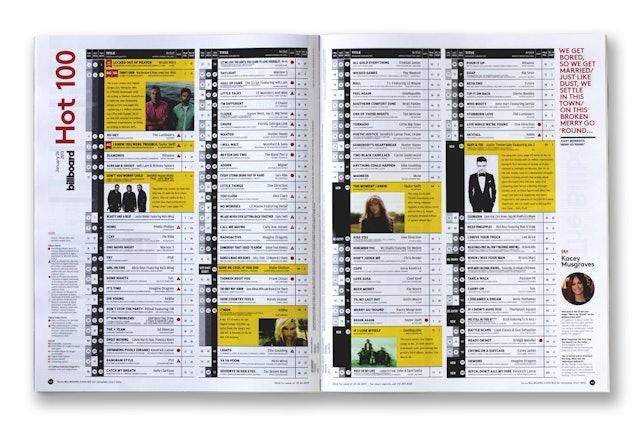
The Billboard Hot 100, for example, combines streaming activity, radio airplay, and sales data to rank songs in the United States.
The Billboard 200 measures album consumption through traditional album sales, track sales, and streaming-equivalent album units.
This is why the difference between a song chart and an album chart matters.
A song might perform strongly on streaming services without generating substantial album sales.
Another might receive significant radio airplay but have a smaller online audience.
A third could sell large numbers of physical albums to a dedicated fan base.
Billboard attempts to translate these different forms of consumption into rankings that can be compared.
That requires judgment calls.
How many streams should equal one album sale?
Should a paid stream carry more weight than a free stream?
How should music videos count?
What forms of listening are eligible?
And how should different consumption methods be combined?
These decisions might sound like accounting questions.
But they influence which artists appear successful in one of the music industry’s most visible measurement systems.
The charts do not merely report numbers. The methodology determines how those numbers become rankings.
A Simple Example Shows Why the Change Matters
Imagine two hypothetical albums.
Album A generates 1.5 million eligible streams from paid subscribers.
Album B generates 1.5 million eligible streams from ad-supported listeners.
Under Billboard’s outgoing album formula, Album A would receive 1,500 streaming-equivalent album units.
Album B would receive only 600.
Now apply the formula beginning in January 2027.
Album A still receives 1,500 streaming-equivalent album units.
Album B receives 1,000.
Nothing changed about how many times either album was streamed.
Only the measurement changed.
The gap between their calculated album-consumption totals becomes significantly smaller.
This is a simplified illustration, not a prediction about any particular chart position. Actual rankings can also incorporate eligible sales and other consumption activity.
Still, the example demonstrates why methodology matters.
The same listening behavior can produce different results depending on how the industry chooses to measure it.
That is especially important for artists whose audiences primarily consume music through free platforms.
Why Billboard Gives Paid Streams More Weight
There is an economic rationale behind treating paid and ad-supported listening differently.
Paid subscriptions generally produce more revenue per listener than advertising-supported services.
That difference is visible in recorded music industry reporting.
According to the Recording Industry Association of America’s 2025 annual revenue report, U.S. recorded music generated approximately $11.5 billion in wholesale revenue.
Streaming accounted for about $9.5 billion of that total.
Paid subscription services represented a particularly significant share of the market, while free advertising-supported streaming generated substantially less revenue.
From an industry perspective, a stream associated with a paying subscriber may therefore represent greater economic value than one supported through advertising.
Billboard’s methodology has historically reflected that distinction.
There is a defensible argument for measuring commercial performance partly through the revenue associated with different listening formats.
A song generating substantial paid consumption is demonstrating something economically important.
But there is also a limitation to this approach.
Commercial value and cultural popularity are related, but they are not identical.
A person can become deeply invested in an artist without subscribing to a streaming service.
A music video can reach millions of people who never purchase an album.
An independent musician can develop a large following through free digital platforms before generating substantial revenue.
None of those outcomes necessarily means the music is less culturally significant.
That is where YouTube’s argument becomes particularly relevant.
If the purpose of a chart is to identify what people are listening to, perhaps every eligible listen deserves more equal consideration.
If the purpose is to measure commercial performance, different economic weights may make sense.
The problem is that music charts are often expected to represent both.
YouTube Has Changed the Definition of a Hit Before
This is not the first time YouTube has challenged how the industry measures music popularity.
In 2013, Billboard began including eligible YouTube activity in its Hot 100 calculations.
The impact was immediate.
Producer Baauer’s song “Harlem Shake” debuted at number one after the chart incorporated YouTube streams.
The track had become the soundtrack to a viral internet phenomenon, with users creating countless videos featuring the song.
That popularity was not developing through traditional radio promotion alone.
It was emerging through online participation.
According to reporting at the time, YouTube activity helped push the song to the top of the Hot 100, illustrating how quickly internet culture could influence established music rankings.
The moment exposed a changing reality.
A song could become culturally unavoidable before traditional industry measurements fully recognized its reach.
YouTube’s inclusion helped Billboard adapt to that reality.
The 2026 dispute brings the same fundamental issue back into focus.
The music industry is once again confronting a gap between how people consume music and how that consumption is measured.
This time, the question is not whether YouTube belongs in the charts.
It is how much the people listening on YouTube should count.

What This Means for Independent Artists
The dispute has particular relevance for independent musicians.
Major recording artists often have established promotional networks, label resources, radio relationships, and audiences distributed across multiple platforms.
Independent musicians may depend more heavily on individual channels of discovery.
For some, YouTube is not simply a place to upload promotional videos.
It is where listeners first encounter their work.
A live performance, an independently produced music video, or a recommendation from an online creator can introduce an artist to an audience that may not yet follow them on traditional streaming platforms.
That audience might be highly engaged without generating the same subscription-based activity as listeners using paid services.
When chart formulas give greater weight to paid consumption, the resulting rankings can favor particular listening patterns.
This does not mean independent artists automatically lose under the current system.
Some independent musicians build substantial paid-streaming audiences, while major-label artists also benefit enormously from free platforms.
The relationship is more complicated than a simple divide between independent and mainstream music.
Still, making ad-supported streams more influential could improve chart representation for artists whose audiences rely heavily on free listening.
YouTube’s return also restores an important source of consumption data that had been missing from Billboard’s U.S. charts during much of 2026.
That could provide a more complete picture of music engagement across the market.
But it remains uncertain which artists will benefit most or how much individual chart rankings will change.
Those effects will become clearer only after the new methodology takes effect.
The Charts Are Not the Same as Music Discovery
There is another important distinction.
For many listeners, discovering a new artist happens long before they check Billboard.
Music discovery increasingly takes place through recommendation algorithms, social media, video platforms, playlists, online communities, and independent publications.
A song may become meaningful within a particular community without reaching the Hot 100.
An experimental artist can attract devoted listeners without competing commercially with mainstream pop stars.
A regional music scene can flourish while remaining largely invisible to national rankings.
This raises a question about what people expect a chart to represent.
Billboard is not designed to capture every dimension of musical influence.
It cannot fully measure artistic originality, emotional impact, community significance, or the longevity of a piece of music.
Even a perfectly calculated consumption chart would remain a measurement of activity, not an objective ranking of artistic quality.
That does not make Billboard irrelevant.
Its charts provide a valuable historical record of commercial music consumption.
They help document changes in listening behavior and offer a shared reference point for the industry.
But the distinction between popularity and artistic value deserves attention.
A number-one song is not automatically the most meaningful song released that week.
And a musician who never charts is not necessarily less important to the people who listen.
The Problem With Treating Every Stream as Equal
YouTube’s original argument raises another complication.
If every stream counted equally, would that necessarily create a more accurate measure of popularity?
Not always.
Streaming platforms operate differently.
Some listeners select specific songs and actively play them.
Others encounter music through automated playlists, recommendations, or background listening.
Certain platforms emphasize music videos, while others focus on audio consumption.
Platforms also have different safeguards against artificial streaming, manipulation, and invalid activity.
That means a stream is not always an identical expression of listener intent.
Someone deliberately selecting a song and listening repeatedly is demonstrating a different kind of engagement from a person who encounters the same track incidentally.
Neither experience is necessarily worthless.
But converting them into a single universal measurement can be difficult.
There are also incentives to manipulate rankings.
Whenever chart positions carry commercial value, artists, labels, promotional teams, and third parties may try to influence the underlying measurements.
Billboard and Luminate maintain eligibility criteria and review processes intended to limit manipulation and ensure that qualifying activity is counted consistently.
The challenge is developing a methodology that reflects genuine consumption without rewarding artificial activity or privileging one business model unnecessarily.
That problem cannot be solved simply by declaring that every stream is worth the same amount.
Why YouTube’s Return Matters Beyond Billboard
YouTube’s decision to resume submitting data is significant for another reason.
It demonstrates the influence large technology platforms have over the institutions responsible for measuring cultural success.
Billboard is an established music industry authority.
YouTube is a major platform through which people discover, watch, and listen to music.
Both have an interest in ensuring their understanding of music consumption remains relevant.
When YouTube withdrew its data, Billboard lost access to a major source of listening activity.
When Billboard revised its formula, YouTube agreed to return.
The sequence illustrates how music measurement is influenced not only by listeners, but also by relationships among technology companies, data providers, and industry institutions.
The public may see a chart as a neutral list of popular songs.
Behind that list is an extensive infrastructure involving commercial agreements, data collection, eligibility standards, and methodological choices.
Those systems are not inherently improper.
Reliable charts require consistent rules and trustworthy information.
But the choices deserve scrutiny because of how much authority chart rankings carry in public conversations about musical success.
What Happens in 2027?
The revised formula will begin appearing on Billboard charts in January 2027.
For the Billboard 200, the January 16 chart will reflect the first tracking week using the new album-consumption calculations.
YouTube has confirmed that it will return its data to the U.S. charts, although the effects will depend on applicable chart eligibility rules.
Paid subscription streams will continue to receive more weight than ad-supported streams.
The gap will simply be smaller.
That leaves several questions worth following.
Will artists with strong YouTube audiences experience noticeable chart gains?
Will certain genres benefit more than others?
Could the change narrow the difference between viral popularity and established commercial success?
And will future revenue changes lead Billboard to revise the formula again?
There are no definitive answers yet.
The industry will need actual chart results to evaluate the consequences.
But one outcome is already clear.
Billboard’s methodology is not permanent.
It changes in response to how people consume music and how the industry evaluates that consumption.
So, Who Really Decides What Makes a Hit?
There is no single answer.
Listeners decide which music to play, share, revisit, and recommend.
Artists and record labels influence discovery through releases, promotion, and distribution.
Streaming platforms shape exposure through their interfaces and recommendation systems.
Radio stations, social media networks, and cultural communities help determine which songs become widely recognized.
And Billboard, working with data providers such as Luminate, determines how certain forms of consumption are translated into widely recognized chart rankings.
Each plays a different role.
The mistake is treating those roles as interchangeable.
A chart ranking can document commercial performance without fully capturing an artist’s cultural significance.
A viral song can dominate online conversation without generating the same revenue as a successful paid-streaming release.
And a devoted audience can exist outside the systems used to measure mainstream success.
The Billboard and YouTube dispute reveals how difficult it has become to define popularity in an industry where music travels through so many different channels.
For years, the industry has tried to reduce listening behavior to a common measurement.
But music does not exist only as a financial transaction.
It exists in the videos people share, the songs they discover by accident, the artists they support through small online communities, and the performances that stay with them long after the charts have changed.
Billboard’s new formula may bring its rankings closer to modern listening habits.
YouTube’s return may restore a broader picture of music consumption.
Neither development will settle every debate about how popularity should be measured.
But perhaps that is the point.
A hit song is not simply what the industry says is popular. It is what listeners make meaningful.
And as the way we experience music continues to change, the systems measuring that experience will have to keep changing with it.
Sources: YouTube Official Blog, “YouTube data is returning to U.S. Billboard charts in 2027” (post first published December 17, 2025; updated November 9, 2026); Music Business Worldwide, “Billboard changes ‘free’ vs. paid streaming formula on charts – and YouTube is bringing its data back” (November 9, 2026); Pitchfork, “YouTube Squashes Feud With Billboard Charts” (November 9, 2026); TechCrunch, “YouTube Streaming Data Returns to Billboard Charts, Ending Major Disagreement” (November 9, 2026); Luminate, “Equivalent Weighting: Measuring Music Consumption“; Luminate, “Charts: The data behind the hit rankings“; Recording Industry Association of America, “2025 Year-End Recorded Music Revenue Report” (March 2026); Los Angeles Times, “Billboard Changes Criteria for Hot 100; Harlem Shake Benefits” (February 21, 2013)
Read Next
Hollywood’s AI Double Life: The Technology Studios Are Embracing Behind Closed Doors
The Race to Save 100 Years of Sound and Film Before It’s Too Late
Future Islands – People Who Aren’t There Anymore
Leave a Reply