
Independent developers are unlocking hidden possibilities inside Sony’s PlayStation 5, while a controversial $50,000 security bounty and the approaching end of physical games have reignited a fundamental debate: Do gamers really own the consoles and games they buy?

Prefer to listen instead?
Hear the full story of the PS5 jailbreak war — the Relapse exploit, the $50,000 bounty dispute, PS2 discs on a PS5, and Sony’s plan to end physical games.
Sony’s PlayStation 5 is approaching its sixth anniversary, but some of the most fascinating developments surrounding the console are happening far outside Sony’s official ecosystem.
In recent months, independent security researchers and homebrew developers have discovered ways to circumvent portions of the PS5’s security architecture, install alternative operating systems, and even play original PlayStation 2 discs on modified consoles.
Meanwhile, Sony has continued releasing firmware updates, closing vulnerabilities and reinforcing security protections designed to prevent unauthorized software from running on its hardware.
The situation has become increasingly contentious.
A researcher reportedly received $50,000 for disclosing a critical PlayStation security flaw, triggering an extraordinary dispute within the hacking community. Another prominent developer abandoned work on Linux support for the PS5 after the vulnerability was reported.
And in a separate development with potentially enormous consequences, Sony has announced that physical discs for new PlayStation games will disappear beginning in 2028.
Taken together, these developments reveal a growing tension between the company that manufactures PlayStation hardware and the consumers and developers who believe purchasing a console should provide greater freedom to use it.
For Sony, the conflict concerns cybersecurity, intellectual property, and protecting its gaming ecosystem.
For homebrew developers, it concerns technological freedom, preservation, and the right to explore hardware they legally purchased.
For ordinary gamers, the consequences could determine how they experience decades of PlayStation history.
The PS5 Was Never Completely Open
When Sony launched the PlayStation 5 in November 2020, the console introduced considerably faster storage, advanced graphics capabilities, and a new generation of gaming experiences.
It also continued Sony’s longstanding approach to console security.
Unlike a conventional personal computer, the PS5 operates within a tightly controlled software environment. Sony determines which applications can run, how games are authenticated, and how system software interacts with protected hardware components.
The console officially supports the overwhelming majority of PlayStation 4 games through backward compatibility.
But original PlayStation, PlayStation 2, and PlayStation 3 discs cannot simply be inserted into an unmodified PS5 and played.
Although Sony offers selected classic titles through its digital services and subscription catalog, that approach differs significantly from allowing consumers to use their existing physical collections.
For years, independent developers have attempted to overcome these limitations.
Some are interested in writing their own applications. Others want to install Linux, experiment with emulators, improve the performance of older games, or preserve software that is no longer commercially available.
A smaller, more controversial segment of the community seeks to bypass game licensing protections.
Those motivations frequently overlap within the same technical research, but they are not interchangeable.
Jailbreaking a console does not automatically mean pirating games.
And understanding that distinction is essential to examining the PS5 controversy.
September 2026: The Relapse Breakthrough
On September 29, 2026, the PS5 hacking community experienced one of its most consequential developments in years.
Researchers released an exploit known as Relapse, which expanded publicly accessible jailbreak capabilities to systems running firmware versions up to 13.60.
Previous jailbreak methods had often required older firmware, leaving many PlayStation owners unable to experiment with their consoles unless they could locate devices that had not been updated for years.
Relapse dramatically expanded the potential pool of compatible hardware.
According to reporting from Ars Technica, the exploit leveraged a vulnerability involving WebKit, the browser technology present within the PS5’s limited web functionality.
The attack chain allowed researchers to progress from user-level access into portions of the console’s kernel, the operating system component responsible for managing critical system functions.
Once sufficient access was obtained, developers could load unofficial programs that would ordinarily be rejected by Sony’s security mechanisms.
This opened possibilities for emulation, software modification, homebrew utilities, and continued research into running Linux on PlayStation hardware.
However, the breakthrough came with limitations.
A kernel exploit does not necessarily grant complete control over the console’s security architecture. Additional restrictions, including the hypervisor and game-specific protections, can remain intact.
Compatibility also depends heavily on firmware versions and the maturity of individual tools.
In other words, Relapse represented a major development, not a universal solution that permanently unlocked every PlayStation 5.
Sony’s response was predictable.
Firmware version 14.00, released in September, closed the vulnerability exploited by Relapse.
Subsequent updates continued the security battle, including version 14.20 on October 21 and version 14.22 on November 2.
The latter update explicitly included security fixes.
For Sony, these patches are part of maintaining a trustworthy commercial platform.
For enthusiasts working on unsupported applications, each security update potentially removes months of research progress.
And that creates a peculiar situation: a PlayStation owner may find that updating their console to play a newly released game prevents them from running independently developed software.
The PlayStation 2 Discovery That Raised an Awkward Question
One of the most exciting developments emerged in October.
A homebrew project called PS5SX2 demonstrated the ability to play original PlayStation 2 discs on modified PS5 hardware.
The project builds on PCSX2, the well-known open-source PlayStation 2 emulator developed primarily for personal computers.
By adapting emulator technology to the PS5’s architecture, developers demonstrated that Sony’s modern console could reproduce older PlayStation experiences without relying exclusively on Sony’s official classic-game offerings.
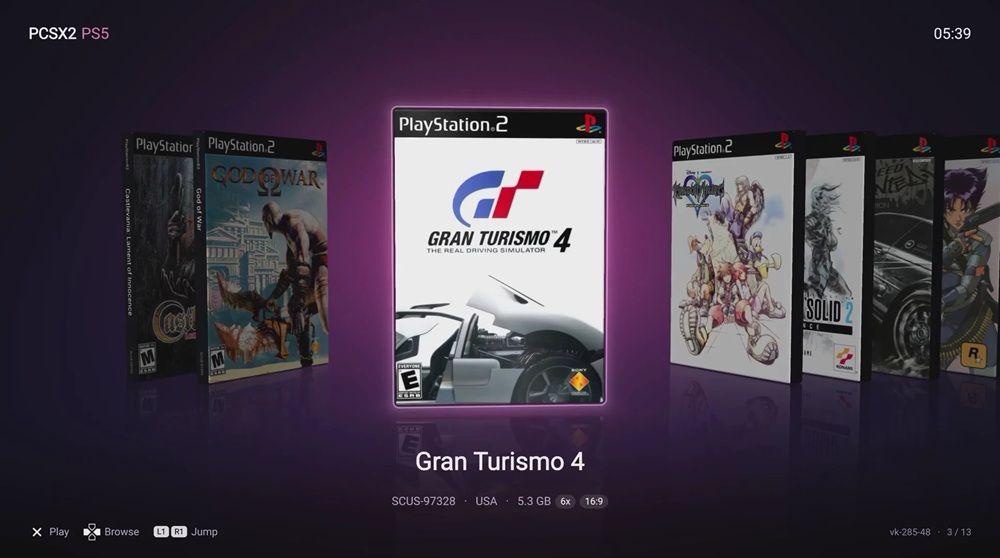
The significance goes beyond nostalgia.
For collectors who still own their original PS2 libraries, the development raises a question that Sony has never fully resolved for its contemporary hardware: Why should players need to repurchase selected games digitally when they already possess the original discs?
There are important technical distinctions.
PS5SX2 does not establish that the PS5 contains fully functioning native PS2 hardware compatibility. It uses software emulation, and performance and compatibility can vary depending on the game and configuration.
Furthermore, the feature requires an appropriately modified PS5. Ordinary retail consoles do not suddenly support PS2 discs.
Nevertheless, the achievement highlights the capabilities of independent software development.
It also challenges the assumption that Sony’s official implementation represents the full extent of what its hardware could potentially accomplish.
Developers have discussed extending similar ambitions toward PlayStation 3 compatibility, although that introduces considerably more complicated emulation challenges.
The PS3’s Cell processor architecture is notoriously complex, and successful PS2 emulation does not automatically imply reliable PS3 emulation.
That is precisely why experimental development matters.
The community is exploring technological possibilities that manufacturers may have little commercial incentive to prioritize.
Sony’s $50,000 Bounty—and the Researcher Who Walked Away
The most controversial chapter of the recent PS5 hacking story involves a security researcher known online as Jordy.
In October, reports emerged that Jordy had received a $50,000 reward through Sony’s PlayStation bug bounty program, administered using HackerOne.
Bug bounty programs compensate researchers for privately reporting security vulnerabilities so companies can investigate and resolve them before malicious actors exploit the weaknesses.
Such programs are common throughout the cybersecurity industry.
The PlayStation reward itself was therefore not particularly unusual.
What made the situation explosive was the surrounding dispute.
According to reporting by IGN, Jordy had used assistance from artificial intelligence to identify a PS5 hypervisor vulnerability.
The hypervisor is a particularly sensitive component of the console’s security architecture. It helps separate and control access to protected system resources.
Exploiting a weakness at that level can open possibilities beyond those available through ordinary application or kernel-level vulnerabilities.
Another prominent researcher, Andy Nguyen, widely known as TheFlow, had reportedly discovered the same flaw independently while working on a project intended to expand Linux support on PlayStation hardware.
Nguyen hoped to delay disclosure until after the release of Grand Theft Auto VI.
The reasoning was tied to firmware requirements.
New commercial games often require relatively recent system software. If Sony patched the vulnerability before GTA VI launched, enthusiasts might face a difficult choice between installing the latest official firmware to play the game or preserving the older software necessary for their homebrew environment.
Jordy reportedly initially agreed to delay disclosure.
However, after learning that others had also discovered the vulnerability, Jordy decided to submit the finding to Sony.
The decision generated strong criticism within portions of the homebrew community.
Nguyen subsequently announced that he was stepping away from PS5 development and discontinuing work on Linux support, including planned improvements for PS5 Pro hardware.
For the developers involved, the dispute became deeply personal.
But there is an important evidentiary distinction: while reporting links Jordy to the hypervisor disclosure and documents a $50,000 reward, publicly available information does not conclusively establish that the visible $50,000 award was for that exact vulnerability.
Treating those facts as definitively identical would go beyond what has been publicly confirmed.
Even with that qualification, the controversy reveals a serious divide within security research.
Some developers believe vulnerabilities should be preserved temporarily to enable experimentation, homebrew functionality, and hardware research.
Others argue that reporting vulnerabilities promptly is an ethical responsibility, particularly when the same weaknesses could eventually be discovered and exploited by malicious actors.
Both positions have consequences.
A vulnerability that enables Linux can also undermine security boundaries designed to protect games, online services, and user data.
Conversely, eliminating vulnerabilities without offering legitimate alternative development pathways can leave independent enthusiasts with no practical way to explore the capabilities of hardware they own.
That tension has existed for decades.
The PS5 is simply its newest battlefield.
Artificial Intelligence Is Changing the Hacking Landscape
Jordy’s reported use of AI introduces another dimension to the controversy.
Artificial intelligence is increasingly capable of assisting researchers with code analysis, vulnerability discovery, and the identification of unusual software behavior.
For professional security teams, these capabilities can accelerate investigations that previously required substantial manual effort.
But they also change the economics of finding vulnerabilities.
If more researchers can discover sophisticated security flaws with assistance from AI tools, manufacturers may face a growing number of reported weaknesses and increasingly rapid cycles of exploitation and patching.
The same trend could make the competitive environment around bug bounties more intense.
Researchers may feel pressure to disclose vulnerabilities quickly to secure recognition or compensation before another person reports the same issue.
This creates a complicated incentive structure for independent communities that traditionally relied on informal collaboration and shared technical knowledge.
The important question is not whether using AI makes a researcher legitimate.
Rather, it is how automated discovery changes the relationship between security researchers, manufacturers, and the communities that depend on their work.
The consequences extend far beyond PlayStation.
The same dynamics increasingly affect operating systems, connected devices, smartphones, and the broader software industry.
The Bigger Story: Sony Is Moving Away From Physical Games
While the hacking controversy captures headlines, a separate Sony announcement may ultimately have greater long-term significance for ordinary players.
On July 1, 2026, Sony announced that production of physical game discs for new PlayStation releases would end beginning in January 2028.
Games released or scheduled for physical release before that deadline are not affected by the new policy.
Sony explained that the decision reflects growing consumer preference for digital distribution.
The company has legitimate commercial reasons to pursue that strategy.
Digital distribution reduces dependence on traditional retail logistics, offers convenient access to games, and allows software updates and purchases to take place directly through the PlayStation ecosystem.
For many consumers, downloading a game is already more convenient than purchasing a physical disc.
But convenience is not the entire story.
Physical games have historically provided consumers with benefits that digital licensing does not always replicate.
Players can lend, resell, collect, and sometimes continue using physical copies long after publishers stop actively supporting their products.
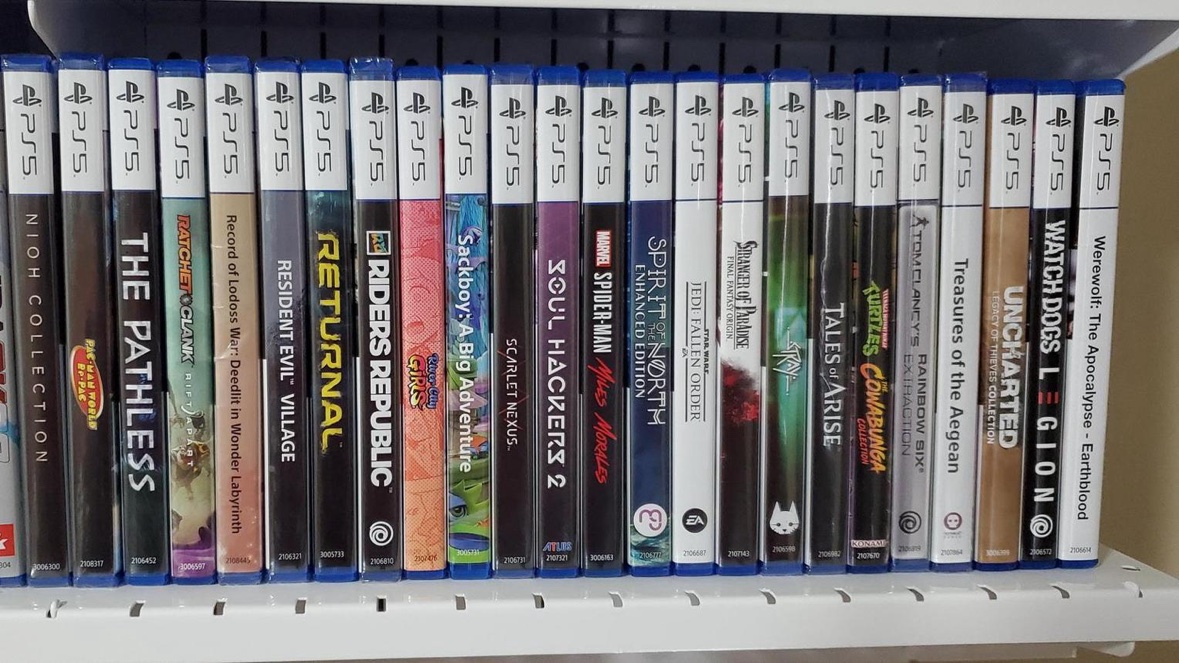
That does not mean every disc is completely independent of online services. Some physical releases still require downloads, activation, or server connections.
Nevertheless, physical media can provide an additional measure of durability and consumer control.
In a digital-only environment, consumers become more dependent on the continued operation of storefronts, authentication systems, licensing agreements, and publisher infrastructure.
A purchased game may remain playable for decades.
But that outcome can depend on decisions made by companies long after the original purchase.
The transition also raises questions about pricing and competition.
Physical retailers and used-game markets create alternative avenues for purchasing software.
A platform increasingly centered on a single digital storefront may reduce those alternatives.
That is why the PS5 homebrew controversy and Sony’s physical-media announcement belong in the same broader conversation.
Both concern the relationship between hardware ownership, software access, and corporate control.
Is Sony Wrong to Protect the PlayStation 5?
It would be easy to portray Sony as a corporation determined to prevent consumers from enjoying features that independent developers can provide.
But that interpretation would overlook the responsibilities involved in operating a global gaming platform.
Sony must protect publishers’ intellectual property, combat cheating, secure online services, and prevent vulnerabilities from being exploited against its customers.
A compromised gaming environment can undermine trust among developers and players alike.
Security updates also protect systems against threats unrelated to piracy.
And although homebrew applications can serve entirely legitimate purposes, some vulnerabilities used to enable those applications can also facilitate unauthorized copying or circumvention of commercial protections.
Sony is therefore not automatically wrong to patch known vulnerabilities.
The more compelling criticism concerns what Sony offers consumers in return for those restrictions.
If enthusiasts want to play original PlayStation discs, run Linux, or preserve discontinued software, should Sony provide officially supported alternatives?
Could a secure developer environment permit experimentation without exposing commercial games or online multiplayer systems?
Could older titles receive broader emulation support, particularly when consumers still own the original media?
These are not impossible questions for a technology company to explore.
They are questions about product priorities, business models, and how much control a manufacturer should retain over a device after selling it.
What Comes After the PlayStation 5?
Sony’s future hardware plans add another layer of uncertainty.
During its November 2026 financial reporting, the company indicated that preparations for its next-generation PlayStation platform were progressing according to schedule.
Sony has not established a definitive public release date for the next console.
Meanwhile, the PS5 remains a major commercial platform, with cumulative worldwide shipments approaching 100 million units.
The immediate question is therefore not whether PlayStation is disappearing.
It is what kind of gaming ecosystem Sony wants to build next.
Future consoles will almost certainly face increasingly sophisticated security research, especially as AI-assisted development tools improve.
Digital distribution will continue changing the way consumers access and retain games.
And preservation concerns will become more urgent as older storefronts, online services, and hardware platforms age.
There are several paths forward.
Sony could continue prioritizing tightly controlled software environments while expanding its official backward-compatibility offerings.
It could provide more formal opportunities for independent development.
Or it could maintain its existing approach, leaving enthusiasts to discover unofficial solutions while engineers continuously work to close the vulnerabilities they depend upon.
The outcome will influence far more than the next generation of graphics technology.
It will shape how much freedom players retain over the machines and software they purchase.
Gaming’s Future Is Also About Its Past
The current PS5 jailbreak controversy illustrates a contradiction at the heart of modern gaming.
Consoles are more technologically advanced than ever, yet consumers often have less flexibility to modify them or use their older libraries than they might expect.
A modern PlayStation can render extraordinary virtual worlds, but it cannot officially play an original PS2 disc.
Independent developers can demonstrate features that expand a console’s usefulness, yet the technical methods enabling those features may also introduce security risks.
Sony can reasonably argue that protecting its platform is essential.
Consumers can reasonably ask why purchasing sophisticated hardware does not come with greater freedom to determine how it is used.
Neither argument eliminates the other.
But as Sony prepares for its next hardware generation and moves closer to a digital-only future for new releases, the questions become increasingly consequential.
What happens when a digital storefront eventually closes?
Who preserves games that publishers no longer distribute?
Should independent researchers be able to create new uses for aging hardware?
And how much control should a manufacturer retain after a product has been sold?
The hackers working on the PlayStation 5 may not have answers to every one of those questions.
But their discoveries have forced an important conversation.
Perhaps the most significant lesson of the 2026 PS5 jailbreak wave is not that Sony’s security architecture can be challenged.
It is that millions of consumers may eventually have to confront a larger question about the devices and digital products they depend on.
When you purchase a gaming console, how much of it actually belongs to you?
Sources: Ars Technica, “The PS5 Hacking Scene Just Took a Big Leap Forward” (September 30, 2026); Insider Gaming, “PS5 Jailbreak Makes PS2 Discs Playable” (October 10, 2026); Tom’s Hardware, “PS5 Hack Delivers PS2 Disc Support and Upscaling” (October 10, 2026); IGN, “Sony Awarded a Hacker $50,000 for Reporting a PS5 Exploit” (October 26, 2026); Dexerto, “PlayStation Pays Researcher $50,000 Bounty” (October 14, 2026); IGN, “Sony Issues Another PS5 Security Update” (November 2, 2026); PlayStation Blog, “Physical Disc Production Ending in January 2028”; PlayStation Support, PS5 Backward Compatibility; Sony Interactive Entertainment, official hardware sales data; PlayStation Universe, “Sony Says PS6 Development Is Progressing as Scheduled” (November 5, 2026). Images supplied by Pixlehale; emulator screenshot via the PS5SX2 project.
Read Next
Metal Gear Solid: The Game That Spied on Society
Metroid Fusion: A Timeless Exploration of Identity and Survival
The WNBA’s Breakthrough Season: Women’s Basketball Has the World’s Attention. What Happens Next?
Leave a Reply