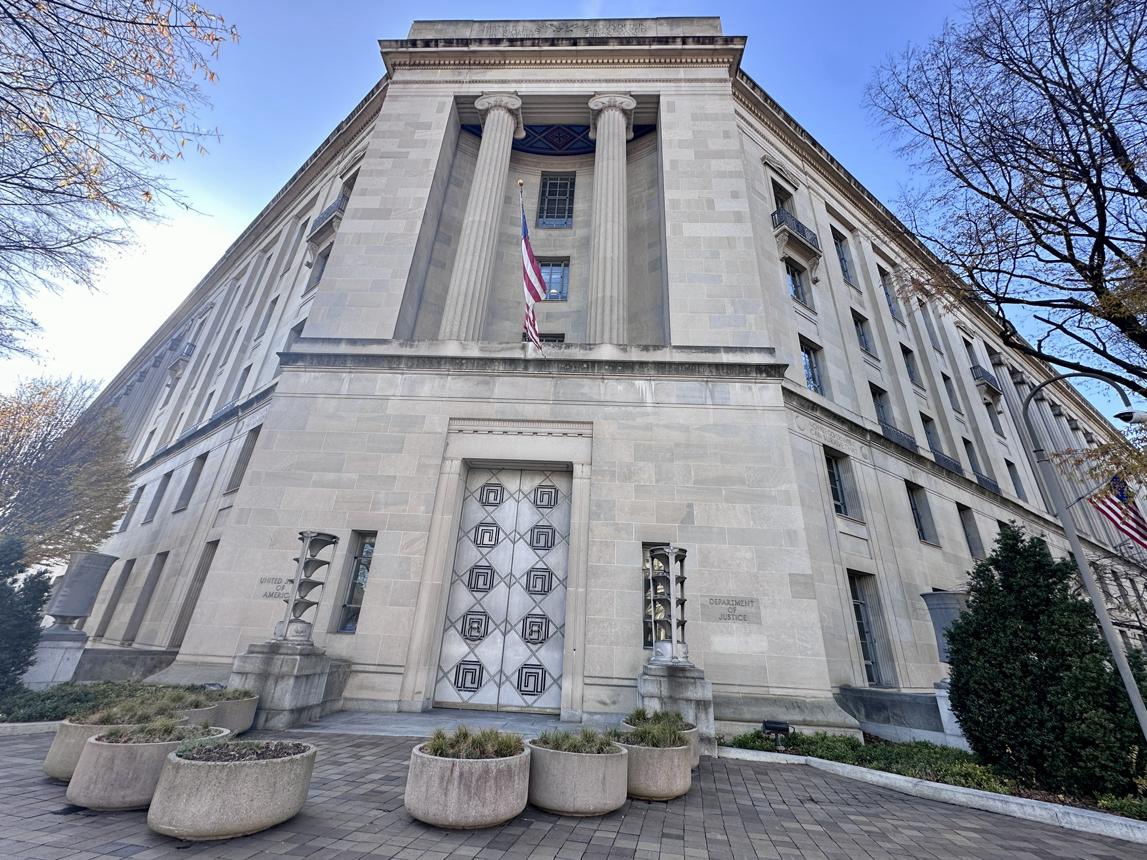
The Trump administration is directing federal agencies to prioritize English in government services, websites, and public communications. The Justice Department says the changes will improve consistency and efficiency. But as multilingual assistance is reduced, a fundamental question emerges: how accessible should the federal government be to people who do not speak English fluently?

Prefer to listen instead?
Hear the full story on the Justice Department’s new guidance, what has already changed at federal agencies, and what it could mean for the millions of Americans who speak English less than very well.
A Quiet Change in How Washington Speaks to America
Imagine visiting a federal government website to apply for housing assistance.
Perhaps you are trying to understand an eligibility requirement, complete an application, or learn whether your family qualifies for a particular program.
You understand some English, but complicated government terminology is difficult. In the past, you might have looked for a Spanish translation, requested assistance in another language, or used a multilingual information page to understand the process.
Now imagine that option disappearing.
This is not necessarily happening at every federal agency, and certain language services remain legally protected. But a newly published Justice Department memorandum makes clear that the federal government is moving toward a more English-centered approach to public services.
On November 12, 2026, the Department of Justice published guidance directing federal agencies to prioritize English across government operations.
The guidance covers websites, digital services, official correspondence, forms, applications, public notices, educational materials, and other government communications.
The document also encourages agencies to review existing multilingual assistance and eliminate services that are not legally required or necessary to accomplish their missions.
This is not merely a proposal for some distant future.
According to the Justice Department, several federal agencies have already begun removing materials previously available in languages other than English.
The Department of Housing and Urban Development, in particular, was identified as having removed non-English languages from departmental business and services in August.
The policy stems from President Donald Trump’s executive order designating English as the official language of the United States.
Supporters describe the change as a step toward administrative consistency, national cohesion, and more efficient government.
But the transition also raises difficult questions about what happens when the government reduces access to information that some residents need in order to understand their rights, responsibilities, and available services.
The issue goes beyond immigration or national identity.
It concerns how the federal government communicates with the public.
And it could affect millions of people.
What the Justice Department Actually Announced
The policy’s origins stretch back to March 2025, when President Trump signed Executive Order 14224, designating English as the official language of the United States.
The order also revoked Executive Order 13166, a policy issued under President Bill Clinton in 2000 that directed federal agencies to improve access to services for individuals with limited English proficiency.
Importantly, Trump’s original order did not require agencies to immediately eliminate multilingual services.
It left agency leaders discretion to determine which services were necessary to carry out their responsibilities.
The administration subsequently began developing more detailed implementation guidance.
In July 2025, the Justice Department announced that it would coordinate efforts to reduce multilingual services it considered unnecessary and redirect resources toward English-language education and assimilation.
The Attorney General issued additional guidance in September 2026, which was revised in October.
That revised memorandum was made public through the Federal Register on November 12.
The document identifies several areas where agencies should prioritize English, including government websites, public communications, forms, and digital services.
It also instructs agencies to assess whether existing translation and language assistance programs are required by law or necessary for their operations.
Where those conditions are not met, the guidance calls for eliminating the assistance.
That is the central policy development.
The administration is moving beyond recognizing English as the official language and encouraging federal departments to make practical changes to the services they provide.
The Changes Have Already Started
One of the most consequential passages in the Justice Department’s memorandum concerns agencies that have already taken action.
The document states that the Department of Housing and Urban Development removed non-English languages from departmental business and services on August 17, 2026.
It also reports that the Departments of Homeland Security, Education, and Treasury have begun removing previously available non-English materials from their websites.
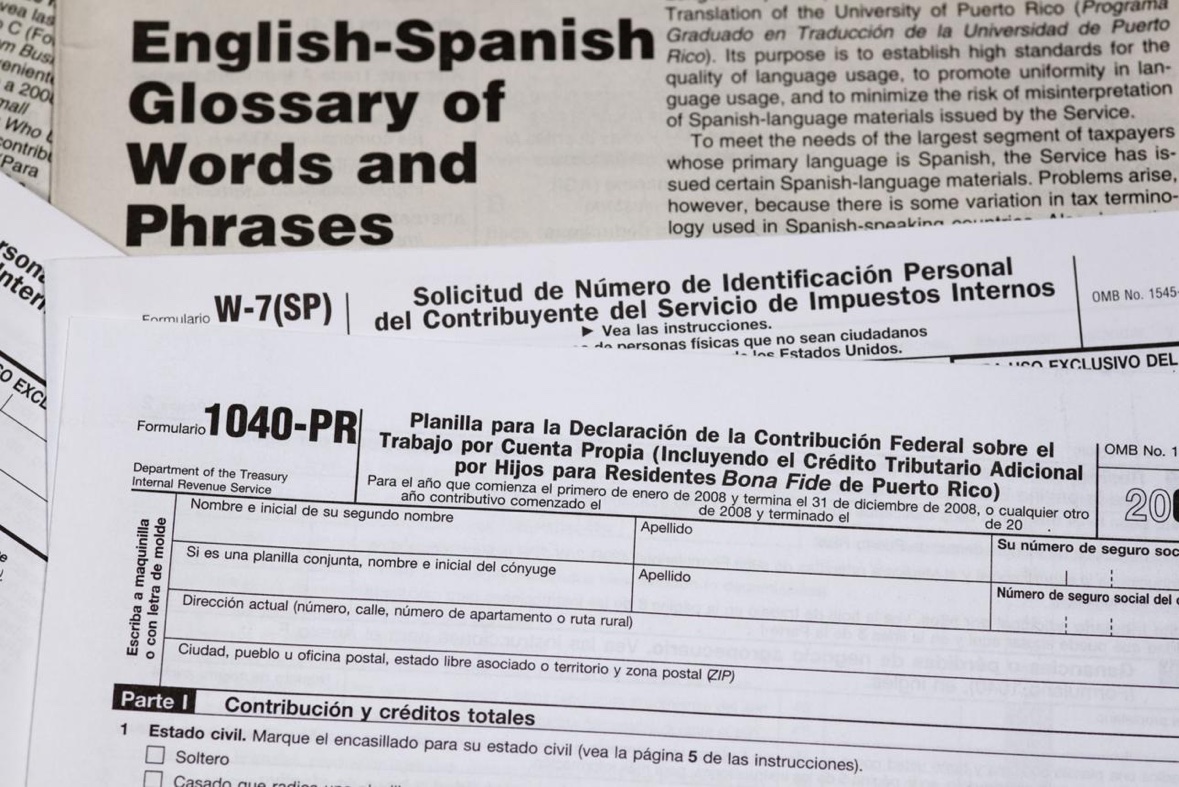
The Justice Department encourages other agencies to identify similar opportunities.
These statements are significant because government websites increasingly serve as the primary entry point for federal services.
Americans use online resources to learn about benefits, understand government requirements, obtain official forms, and contact federal agencies.
For people who do not speak English fluently, translated instructions can make complicated administrative processes easier to navigate.
Removing those resources may create additional challenges, depending on which materials disappear and what alternatives remain available.
However, the extent of the changes varies by agency.
The memorandum does not establish that every translated federal document has disappeared or that every agency has discontinued multilingual assistance.
Nor does it establish that all individuals who use non-English services will lose access to government programs.
The more immediate development is an administrative shift in priorities.
Federal agencies are being encouraged to treat English as the standard language of public communication, with multilingual support retained under specified circumstances.
Millions of Americans Speak English Less Than Very Well
The United States is one of the world’s most linguistically diverse countries.
English is the dominant language of public life, commerce, and government.
But millions of residents speak another language at home, and some have difficulty communicating in English.
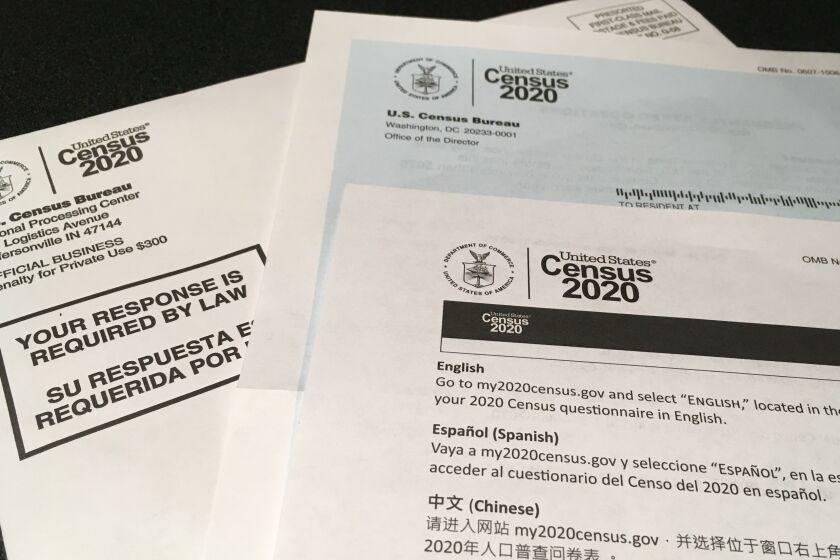
According to 2024 American Community Survey data compiled by the Migration Policy Institute, approximately 47.1 percent of foreign-born U.S. residents aged five and older spoke English less than “very well.”
The corresponding figure among U.S.-born residents was approximately 2 percent.
Using the population estimates reported in the same dataset, those percentages amount to roughly 29 million people nationwide.
Not all of these individuals have the same language needs.
Some can communicate effectively in everyday English but struggle with technical terminology.
Others may require interpretation to understand legal notices, medical information, or government instructions.
And many residents who speak languages other than English are fully fluent in English.
That distinction matters.
The debate is not about whether multilingual Americans can participate in society.
It is about how government institutions should communicate with people whose English proficiency may be insufficient for particular official interactions.
The Administration’s Argument: One Official Language, More Efficient Government
The Trump administration has framed its language policy around national unity and administrative efficiency.
Its executive order argues that a shared language can strengthen civic participation and support a common national identity.
The Justice Department’s subsequent guidance builds on that rationale.
The department argues that agencies should prioritize English while reducing services it considers unnecessary.
The administration has also emphasized English-language education and assimilation as policy goals.
Supporters of an official-language approach may see several potential advantages.
Standardizing government communications could reduce administrative complexity.
Maintaining fewer translated documents could lower certain costs.
And encouraging English proficiency could help individuals navigate institutions where English is already widely used.
These are the administration’s stated objectives, not demonstrated outcomes of the current transition.
The relevant question is whether reducing multilingual assistance actually produces meaningful efficiencies without making government services harder to access.
That is not something the executive order alone can establish.
It depends on how agencies implement the policy, how much translation previously cost, whether alternative assistance remains available, and whether residents can still complete necessary government processes.
What Happens When a Government Form Is No Longer Available in Your Language?
The practical consequences of this policy are easiest to understand through everyday situations.
Consider an older American citizen applying for federal benefits.
The individual may have lived in the United States for decades but still find detailed English-language instructions difficult to understand.
A translated explanation could help clarify application requirements.
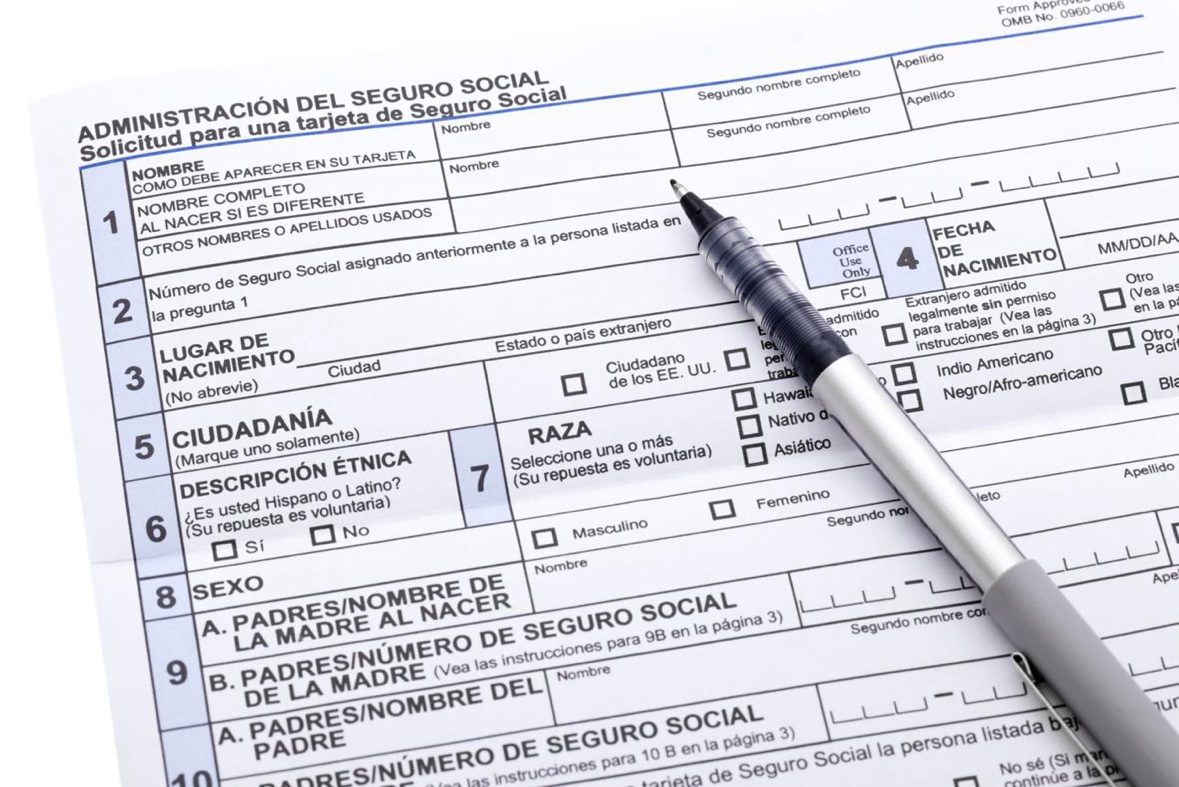
Without it, the person might seek assistance from a family member, an interpreter, a community organization, or an agency employee.
That additional step could create delays or increase the risk of misunderstanding.
Similar concerns could arise when residents attempt to understand housing requirements, public notices, tax information, or other government communications.
This does not mean removing a translated webpage automatically makes a program inaccessible.
Federal agencies may provide other forms of assistance, and some multilingual services must remain available under applicable laws.
But translated materials can serve an important practical purpose.
They allow residents to understand information independently, without necessarily relying on another person to explain it.
The policy therefore raises a question about administrative accessibility.
If government information becomes harder for some people to understand, how will agencies measure whether the savings or efficiencies justify the change?
The Policy Does Not Eliminate Every Translation Requirement
A crucial distinction is often lost in discussions about official-language policies.
The new guidance does not authorize federal agencies to ignore existing legal obligations.
The Justice Department explicitly acknowledges that multilingual assistance must continue when required by the Constitution, federal statutes, binding regulations, judicial orders, or other applicable legal authorities.
It also recognizes that language assistance may be necessary to accomplish important government missions.
Examples include emergency preparedness, disaster response, healthcare services, public safety communications, law enforcement, court proceedings, and certain national security activities.
The memorandum specifically cites the Transportation Security Administration as an example.
Because TSA serves large numbers of international travelers, the agency reported that it would continue using a multilingual automated helpline.
That example demonstrates how the administration expects agencies to distinguish between language services considered necessary and those considered optional.
The distinction also creates room for different interpretations.
A service that one agency considers essential might be viewed differently by another.
An agency could determine that language assistance is needed for emergency communication but unnecessary for certain routine publications.
The resulting system may vary significantly depending on the agency, program, and legal requirements involved.
That is why describing the policy as a universal prohibition on translation would be inaccurate.
It is better understood as a broad administrative effort to prioritize English and reduce multilingual services where officials determine that other languages are not necessary.
What Happened to the Previous Language Access Policy?
For more than two decades, Executive Order 13166 shaped the federal government’s approach to language assistance.
Issued in 2000, the order directed federal agencies to examine the services they provided and develop plans to improve access for people with limited English proficiency.
It also instructed agencies to provide guidance to organizations receiving federal financial assistance concerning language access obligations under Title VI of the Civil Rights Act.
Title VI prohibits discrimination based on race, color, or national origin in programs and activities receiving federal financial assistance.
The relationship between national-origin discrimination and language access has generated legal and administrative debate for years.
The 2025 executive order revoked the earlier presidential directive.
The November 2026 guidance subsequently encouraged agencies to eliminate multilingual services that had been maintained solely because of that revoked order, unless another legal or operational justification remains.
This does not repeal Title VI.
It does not erase federal statutes or binding judicial decisions.
But it changes the executive branch’s interpretation of which services agencies should provide voluntarily and when translation should be considered necessary.
That distinction is likely to become important as federal departments revise their programs.
What About Emergencies, Healthcare, and Public Safety?
Some of the most consequential language-access questions involve situations where misunderstandings could have serious consequences.
An emergency warning is useful only if the intended audience can understand it.
A public health notice may need to reach residents with different levels of English proficiency.
A person reporting a crime may need an interpreter to communicate effectively with investigators.
The Justice Department’s memorandum acknowledges these situations.
It specifically identifies public health, disaster response, healthcare, law enforcement, and communications with crime victims and witnesses as areas where multilingual assistance may be necessary.
However, the guidance also directs agencies to provide assistance only to the extent needed to accomplish their missions.
This introduces a practical question.
Who determines what level of language access is sufficient?
For emergency communications, officials may prioritize speed, clarity, and the ability to reach large populations.
For healthcare services, accurate communication can be critical to understanding instructions and making informed decisions.
For law enforcement, interpretation may affect the accuracy of witness statements or the ability to communicate legal information.
The challenge is not simply whether English should remain the primary language of government.
It is determining which situations require additional language support to ensure that government functions work as intended.
Artificial Intelligence Could Become Part of the Solution
One unexpected element of the November guidance concerns translation technology.
The Justice Department encourages agencies to examine machine translation and advanced AI systems as possible alternatives to more resource-intensive methods of providing multilingual assistance.
According to the memorandum, the Environmental Protection Agency and Department of Homeland Security are evaluating or testing technology intended to support communication with people who have limited English proficiency.
There is a reason the memorandum reaches for that word. The guidance was revised in October 2026 to comply with a separate executive order titled “Inaugurating the Era of Super Intelligence,” and the memo describes what EPA and DHS are testing as “superintelligence and machine translation programs.” “Super intelligence tools” even appears on the memo’s own list of areas where agencies should operate in English only.
This introduces a different dimension to the policy.
The administration is not necessarily suggesting that every remaining translation service should depend on human interpreters or manually translated publications.
Instead, it is exploring whether automated systems could provide certain language services more efficiently.
Machine translation has improved considerably in recent years.
It can make information available quickly and may reduce the expense of translating large volumes of routine material.
But automated translation is not equally reliable in every situation.
Government documents frequently contain specialized terminology, legal distinctions, and instructions where wording matters.
A translation error involving eligibility, deadlines, or legal obligations could have consequences beyond a simple misunderstanding.
That makes quality control important.
The use of AI also raises questions about which languages receive adequate support, how translation accuracy is evaluated, and when human review should remain necessary.
The technology may provide useful alternatives.
But it does not eliminate the need to determine whether translated information is accurate, accessible, and appropriate for its intended audience.
The Larger Question: What Does Equal Access to Government Mean?
At the center of this debate is a question about the relationship between citizens, residents, and public institutions.
Governments regularly establish standard procedures to make administration consistent.
A common official language can be one part of that structure.
But the existence of a standard does not automatically resolve the question of whether people can access the services governed by it.
A resident may be legally eligible for a program while struggling to understand the application.
Another may have the right to submit information but need language assistance to communicate accurately.
A third may be proficient in conversational English but unfamiliar with the specialized vocabulary used in federal notices.
These situations involve practical access rather than political identity alone.
The administration’s approach emphasizes English as the common language of government and encourages agencies to reduce multilingual operations.
A different policy approach would place greater emphasis on maintaining translated resources wherever they help eligible residents navigate public services.
Neither approach can be evaluated solely through its stated intentions.
The relevant evidence includes implementation costs, service accessibility, application accuracy, processing delays, and whether agencies continue meeting their legal obligations.
Those measurements would help determine what the policy accomplishes in practice.
Americans Have Until January 11 to Comment
The November 12 publication also opened a formal public comment period.
The Department of Justice is accepting feedback on the guidance until January 11, 2027.
Comments may be submitted through Regulations.gov using Docket No. OLP188.
The department states that it will review the feedback and determine whether modifications are necessary or desirable.
It does not plan to issue individual responses to comments.
This is an important distinction.
The notice is not announcing a proposed law that must pass Congress before the administration can act.
The executive order is already in place, and federal agencies have already received implementation guidance.
The public comment period offers an opportunity to provide feedback on that guidance while the broader administrative transition continues.
Residents, advocacy organizations, researchers, and other interested parties can submit comments addressing the practical consequences of the policy.
Those comments could include information about translation costs, existing language services, barriers to accessing federal programs, and situations where multilingual assistance remains necessary.
The public record may also provide additional insight into how the changes affect different communities.
A Policy That Deserves More Attention
The national conversation about immigration, identity, and language often focuses on political rhetoric.
But the November 2026 guidance involves something more concrete.
It addresses the actual operations of the federal government.
It could influence which government materials remain available in languages other than English.
It could change how agencies communicate with the public.
And it could determine which language services are maintained, reduced, automated, or discontinued.
The Justice Department’s guidance does not mean that every translated federal service will disappear.
It preserves legally required assistance and recognizes important operational exceptions.
But it does establish a clear preference for English-only operations wherever the administration considers them permissible and practical.
For millions of Americans who speak English less than very well, the consequences will depend on how individual agencies apply those instructions.
Some may continue to provide substantial multilingual assistance.
Others may rely more heavily on English-language materials and limited translation services.
Still others may adopt automated translation technology.
What emerges may be a federal government with significantly different approaches to language access across its departments.
The lasting question is not simply whether English should be the official language of the United States.
That designation has already been made through executive order.
The more immediate question is what that designation should mean for the people who rely on government services.
When the government changes how it communicates, the consequences are measured not only in the languages it uses, but in whether the people it serves can still understand it.
Sources: Federal Register, “Attorney General Memorandum on Implementing English as the Official Language; Request for Information,” November 12, 2026; Executive Order 14224, “Designating English as the Official Language of the United States,” March 2025; U.S. Department of Justice, “Justice Department Releases Guidance on Implementing President Trump’s Executive Order,” July 14, 2025; Migration Policy Institute, U.S. Data Profile, English proficiency of foreign-born and U.S.-born residents, 2024 American Community Survey; U.S. General Services Administration, Language Services Policy; Regulations.gov, Docket No. OLP188.
Read Next
Forget Washington. America’s State Governments Just Changed Dramatically. · Democrats Won Congress. So Why Are They Fighting Each Other? · Democrats Won the Midterms. But Did They Win Over America?