

Two days before Election Day, a Democratic congresswoman endorsed the Republican for Senate in Michigan. The policy case for it doesn’t exist. So what was it for?
Michigan was already Democrats’ most vulnerable Senate seat. They hold it now through retiring Sen. Gary Peters, and to take the Senate they need a net gain of four seats while holding every one of their own.
On Sunday, that math got harder for no governing reason.
Rep. Haley Stevens was supposed to appear at a unity event with Democratic nominee Abdul El-Sayed and Rep. James Clyburn. Instead, after El-Sayed’s campaign asked her to stay away following her Oct. 30 demand that he condemn an outside PAC ad, she appeared with former Rep. Mike Rogers at Perfecting Church on Detroit’s east side and endorsed him.
Start with the facts of the race
El-Sayed, 42, a public health physician and former Wayne County health official, would be the first Muslim elected to the U.S. Senate. He won the Aug. 4 primary by the narrowest of margins — less than one percentage point, 48.5% to 47.5%.
That narrow win is exactly why unity mattered. Stevens carried voters El-Sayed still needs to consolidate, particularly in Wayne and Oakland counties, and among Black and Jewish voters who preferred her in the primary.
And El-Sayed was consolidating. CNN’s Poll of Polls average now has him leading Rogers 50% to 45%, including the final New York Times/Siena poll, released over the weekend, which puts him up 11 points — 53% to 42%. A CNN poll last month showed him with 95% of Democratic likely voters.
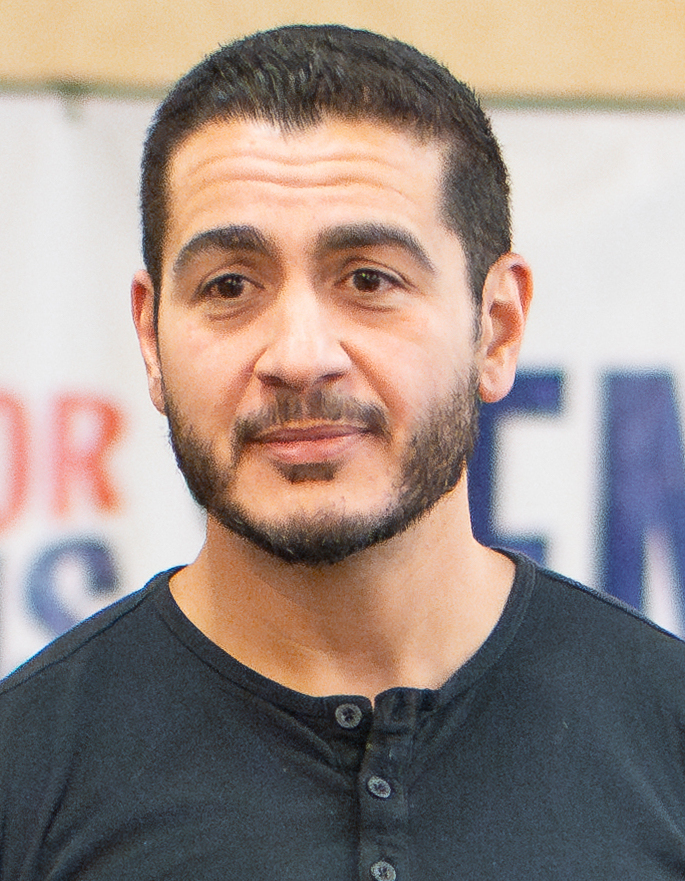
Rogers is no placeholder, either. He represented Michigan in the House for 14 years, chaired the House Intelligence Committee, and lost a Senate race in 2024 by less than half a point. He starts close enough that any crack in the Democratic coalition matters.
The endorsement did crack the numbers — a little. On Kalshi, El-Sayed fell from about 76% before Stevens posted to 68% on Sunday, with Rogers rising to 32%. That’s movement, not a collapse.
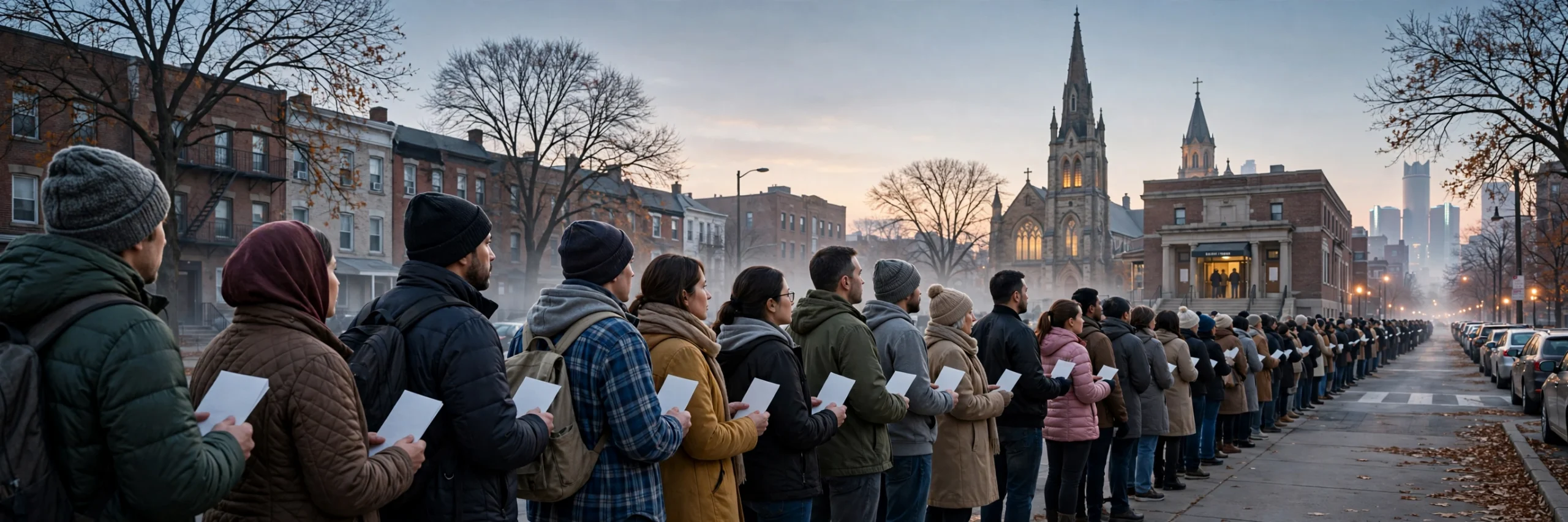
Especially with at least 1.5 million early votes already cast in Michigan as of Sunday — ballots Stevens cannot un-cast with a Sunday video.
And by Monday, even that dip had reversed. Kalshi’s own race coverage put El-Sayed back at 78% on Monday — above where he stood before the endorsement — with Rogers down to 22%. Movement, then a shrug.
In other words: El-Sayed is still the favorite, but he’s a vulnerable favorite. That’s the window Stevens opened.

Her stated reason — and the timeline that undercuts it
Stevens pointed to Israel, to El-Sayed’s campaigning with streamer Hasan Piker, and to a Rebellion PAC ad she called antisemitic that linked U.S. aid to Israel to Michiganders’ cost of living. Her fiancé, Jason Turkish, had already said he would vote for Rogers over El-Sayed’s rhetoric on Israel. Stevens demanded not just distance from the ad — which El-Sayed’s campaign said it had nothing to do with — but an apology for his own rhetoric.
El-Sayed refused to relitigate it, and then told her to stay away from his closing events.
Those disagreements are real. The primary was, in large part, establishment vs. progressive and pro-Israel vs. skeptic of U.S. policy on Israel, and pro-Israel groups poured nearly $40 million into backing Stevens or attacking El-Sayed.
But principle has a timeline problem here.
In August, Stevens warned that Donald Trump and Mike Rogers wanted Democrats to come out of the primary “tired and divided” so Rogers could walk away with the seat, and she said: “I’m not going to let that happen.” In August interviews, she described Rogers as a tool in Trump’s hands.
As recently as Friday, she told the New York Times she would vote for El-Sayed. Rep. Jamie Raskin said she told him Saturday night she planned to vote the entire Democratic ticket — prompting Raskin to say afterward he was “dumbfounded that Haley told me one thing last night and changed her mind today.”
On Sunday she told CNN she woke up “clear-eyed, fresh, and focused on what was in my heart.”
Michigan voters are entitled to ask: if Rogers was unacceptable on Friday, what changed about Rogers by Sunday? Nothing in his record did. What changed was Stevens’ relationship with El-Sayed.
That is grievance, not a policy conversion.
So what does Stevens have to gain?
Not a Senate seat. Not a policy win for her own voters. If Rogers wins, he will not vote for the healthcare, labor, and reproductive-rights priorities Stevens built her House career voting for — and she knows that, because she made that case herself all summer.
What she gains is smaller, and more personal:
1. She stays at the center of the story. A quiet unity appearance makes her a supporting player in someone else’s closing weekend. A cross-party endorsement makes her the news cycle, gets a praise post from Donald Trump — who called it bravery and urged her to switch parties — and gets Rogers to say, on camera, that he’s glad he’s not running against her today.
2. She signals to her donor coalition, not her party. The voters who funded her primary have a clear priority in this race, and it was never really Mike Rogers’ domestic agenda. Endorsing Rogers tells that coalition she chose their red line over her party’s nominee, even at personal cost. That is a signal that can outlast one election — for a future statewide run, a future appointment fight, or a future primary where she wants to be the undisputed leader of Michigan’s moderate, pro-Israel Democratic wing.
3. She gives Rogers a permission structure she herself won’t benefit from. Rogers doesn’t need Stevens to persuade Republicans. He needs her to make it socially acceptable for her primary voters — moderate Democrats who liked her, distrust El-Sayed, and needed a Democrat they trust to say it’s okay. She handed him that cover in Wayne and Oakland counties at the exact moment he needed it most.
4. She settles the primary. El-Sayed beat her by one point after she ran as the establishment’s safest bet, with Chuck Schumer saying in June he thought she had the best chance of beating Rogers. Losing that race, then being told not to come to the unity event, turned a policy split into a public humiliation. Endorsing Rogers is, among other things, a refusal to accept that humiliation quietly.

Now look at the cost side of that ledger, because it’s immediate and it’s hers alone: Schumer, her former backer, called it a “despicable betrayal” and said Senate Democrats are united behind El-Sayed because he will fight for working families. Her longtime chief of staff said he and many on her team resigned over it, and Michigan Democratic Party chair Curtis Hertel said she is no longer a member of the party and won’t be in the future. Peters, whose seat this is, said he was extremely disappointed in his former protégé.
Rogers risks nothing in this deal. Stevens risks her party, her staff, and her own credibility — having argued, correctly in her own words, that Rogers is Trump’s tool, and then endorsing him anyway.
That asymmetry is why this is crazy politics. Not because crossing party lines is always wrong. It’s because the only candidate who gains power from it is the one she spent a year warning Michigan about.
The Monday sequel: both campaigns confirmed the analysis
By Monday, each side had said the quiet part out loud.
Campaigning near the Michigan border, Vice President JD Vance told reporters that Stevens’ endorsement provides a “permission structure” for liberal voters to back Rogers. That is Republicans, in their own words, describing exactly the mechanism above: the value of Stevens to Rogers was never her voters en masse — it was the cover she gives the ones already wavering.
Stevens, for her part, spent Monday explaining herself. In a Detroit Free Press interview published Monday, she called El-Sayed’s focus on Israel “obsessive, obsessive, obsessive,” said she “wasn’t being honest” with herself while supporting him, and argued Rogers could be a “McCain-type person or a Lisa Murkowski” in the Senate. “I’m not going to be best friends with Mike Rogers either,” she added, predicting that Democrats against El-Sayed are “all going to want to come back home.” On conservative commentator Scott Jennings’ radio show, she rejected claims that her fiancé Jason Turkish drove the decision, calling that line of attack misogyny; Turkish himself said anyone who thinks he controls her has “obviously never met Haley.”
She also seems to know the price. CNN reported she told the Free Press, “I’m exiting stage left,” accepting her political career may be over: the Michigan Democratic Party has erased her name from its website, and House Democrats are discussing removing her from their caucus for her final months in office.
Notice what her Monday defense concedes. Her best case for Rogers is not that he shares her politics — it’s that he might, occasionally, behave like two of the Senate’s most famous Republican mavericks. And her path back runs through a party that has already told her, formally, that she is not a member and will not be again.
Why El-Sayed is refusing to play along
El-Sayed’s response has been notable for what it hasn’t been. Asked about Stevens, he said he doesn’t think about her, he thinks about the other 9,999,998 people in Michigan, and he went back to gas, groceries, schools, and healthcare — and to his closing argument that Rogers will be a vote for Trump, whose approval sits at 33% with Michigan likely voters in CNN’s poll.
That discipline is his best defense against the endorsement. Stevens wants the final 48 hours to be about a Democratic feud over Israel and a streamer. El-Sayed needs it to be about affordability and Medicare for All, the issues that got him to 50% in the first place.
The money says the discipline is working. El-Sayed’s campaign said it raised $1.2 million in the four hours after Stevens endorsed Rogers — its second-best fundraising stretch since the primary — and $2.4 million across Nov. 1 in total, from more than 65,000 contributions averaging $36.74, including nearly 30,000 first-time contributors. Whatever Stevens intended, the first measurable effect of her endorsement was to fund her opponent’s closing argument.
If he holds that focus, and if the voters who already banked ballots outnumber the late deciders Stevens can move, he still wins this seat — narrowly, probably by 2 to 5 points, but he wins.
If he loses by a point, Michigan Democrats will not spend November asking whether one more unity photo would have saved him. They will ask a harder question, and it won’t be about Abdul El-Sayed:
What was Haley Stevens trying to save — Michigan, her conscience, or herself?
Because on the evidence of this weekend, it wasn’t her party’s Senate seat.
Sources: USA Today, Le Monde, CNN, Reuters, WSJ, the Detroit Free Press, and Kalshi reporting on the Nov. 1 endorsement, the Aug. 4 primary, polling averages, prediction markets, fundraising, and early voting as of Nov. 1-2, 2026. Photos: Haley Stevens official portrait, U.S. House of Representatives (public domain), via Wikimedia Commons; Abdul El-Sayed at Michigan Technological University, Oct. 22, 2025, by Conlan Houston (CC BY-SA 4.0), via Wikimedia Commons.
Read Next
You Can See Everything, Except the Truth
Trump’s Early Months: Mixed Approval, Deep Federal Cuts, and Musk’s Influence
Karoline Leavitt: MAGA’s Mouthpiece or America’s Press Secretary?